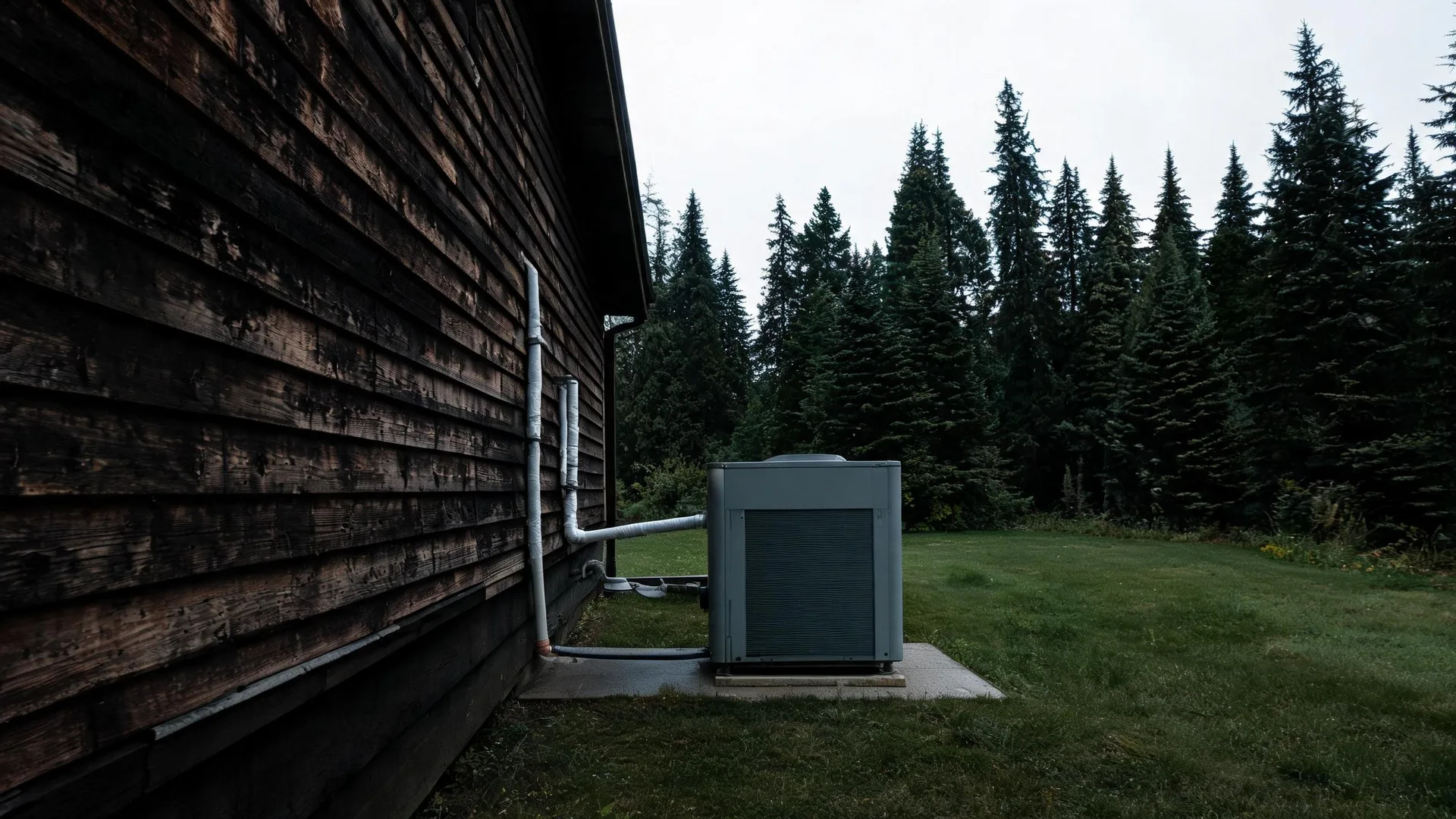
Tell us about the job
Takes about a minute. No obligation.
Sizing a heat pump for this area starts with what the system is asked to do through its hard half of the year. Homes in Amador County, CA run heat about eight months a year, from October through May. A heat pump loses capacity as outdoor temperatures fall, which means a unit that handles a cool October evening may struggle on a January night in the Sierra foothills. The contractor has to establish where the balance point sits before settling on equipment, because the backup heat spec follows directly from that number and shapes the whole quote.
Older ductwork can usually be adapted, but the service panel is a harder constraint. Half the homes in Amador County, California were built in 1984 or earlier (2020-2024 ACS 5-year). A house wired for a gas furnace and a small air conditioner carries a panel that a heat pump's electrical draw may simply exceed, which turns a straightforward swap into a panel upgrade before the equipment conversation even starts. A contractor pricing the job here opens the electrical panel first, not last.
What a Heat Pump Installation Puts in Your Home
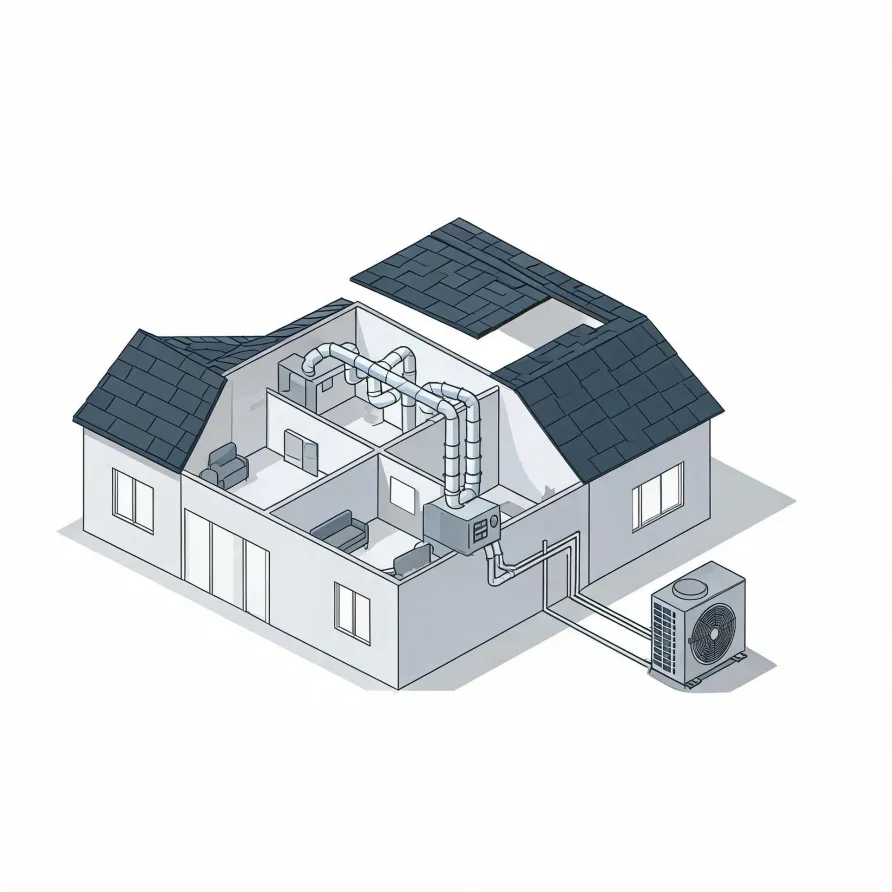
The outdoor unit is the piece most homeowners see first. It sits on a pad beside the house and holds the compressor and the condenser coil, which are the components that move heat between the refrigerant and the outside air. Inside, the air handler mounts in a utility space, closet, or attic and pushes conditioned air through the home.
A refrigerant line set runs between the two units, carrying refrigerant back and forth through insulated copper tubing. Alongside it, a condensate drain line pulls moisture away from the air handler, and a thermostat on an interior wall gives the homeowner control over the whole system.
The drawing shows the general layout of a heat pump system, and a licensed contractor determines exactly how each piece is configured for this house.
Get matched in Amador CountyAmador County, by the numbers
340 severe weather events were recorded in Amador County, California between 2015 and 2024.
NOAA National Centers for Environmental Information, Storm Events Database, bulk CSV export, events 2015-01-01 through 2024-12-31.Half the homes in Amador County, California were built in 1984 or earlier (2020-2024 ACS 5-year).
U.S. Census Bureau, 2020-2024 American Community Survey 5-Year EstimatesAmador County, California holds 19,019 housing units (2020-2024 ACS 5-year).
U.S. Census Bureau, 2020-2024 American Community Survey 5-Year EstimatesOwners occupy 80.4% of the occupied homes in Amador County, California (2020-2024 ACS 5-year).
U.S. Census Bureau, 2020-2024 American Community Survey 5-Year EstimatesRules & Standards Governing Heat Pump Installation in Amador County, California1 sourced rules and standards
Licensing and Legal Requirements in Amador County, California
California requires a state contractor license: it is a misdemeanour to engage in the business of, or act in the capacity of, a contractor in California without one, unless the work is exempt.
Severe Weather Events in Amador County
Heating and cooling loads are set by the climate a building actually sits in, not a regional average. A heat pump sized and installed for local conditions handles the work placed on it year after year.
340 severe weather events, 2015–2024. Source: NOAA National Centers for Environmental Information, Storm Events Database.