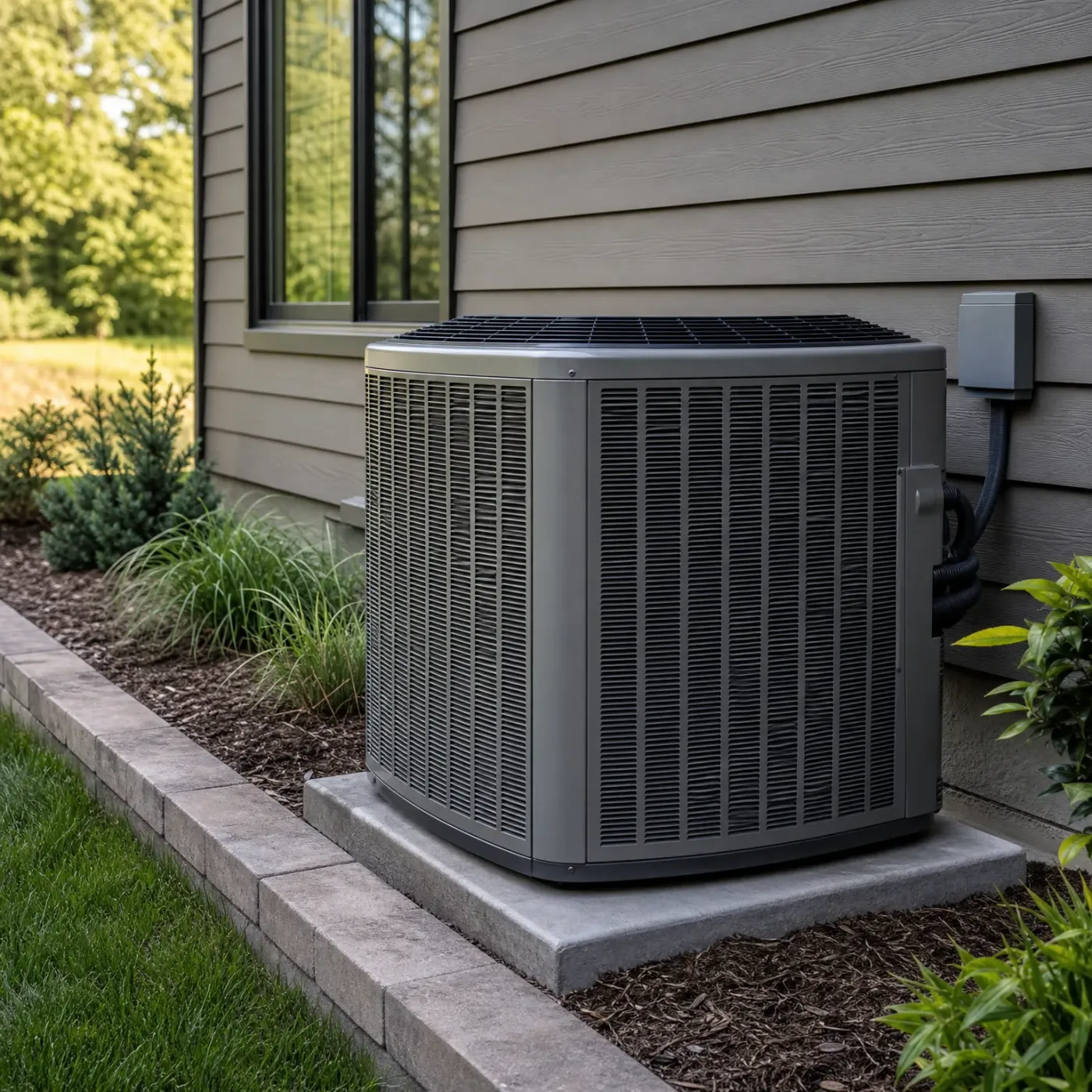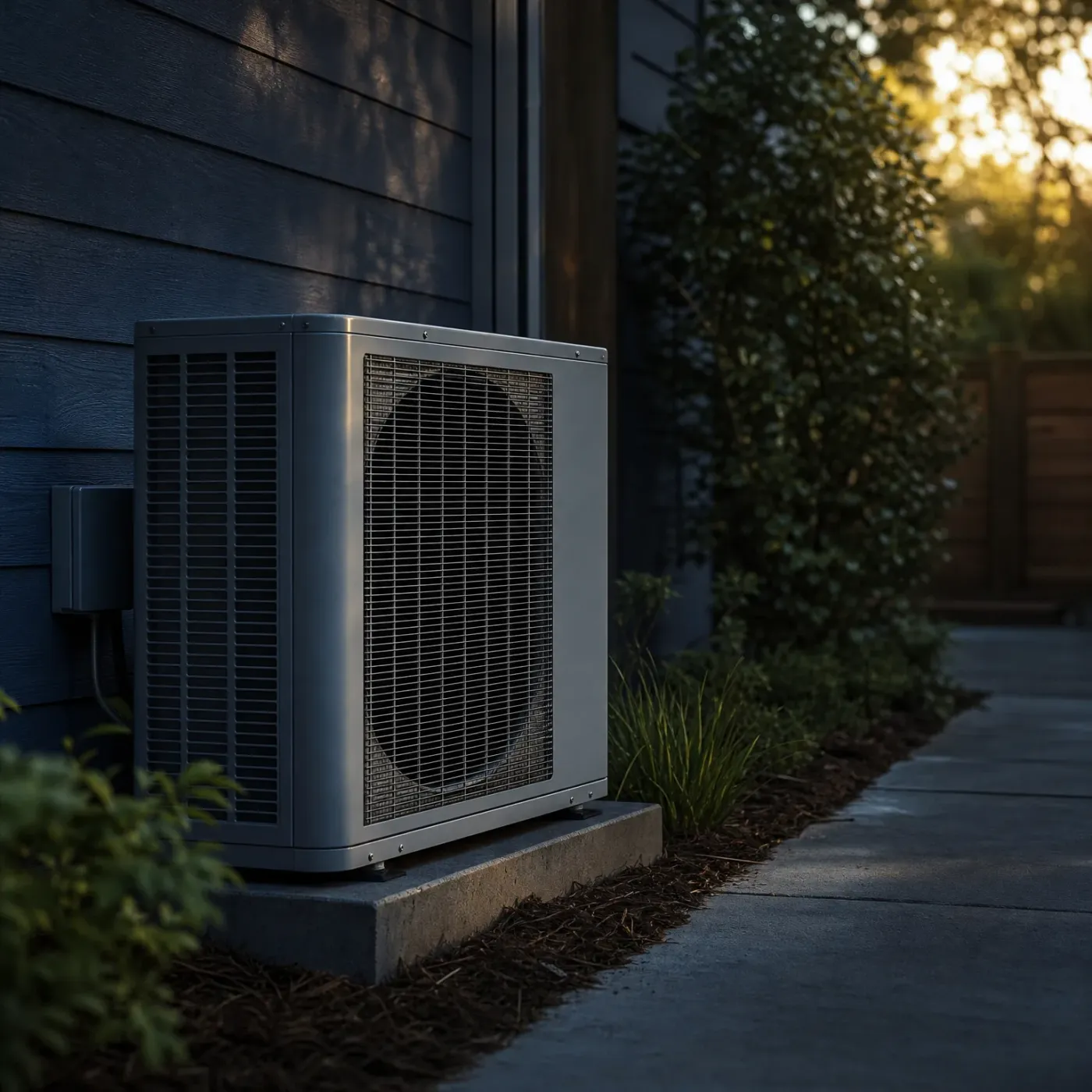
A gray outdoor heat pump unit on a concrete pad beside a dark horizontal-siding wall, with a small electrical box on the wall, shrubs and a concrete walkway to the right at dusk.

The right pro for this job

How long a heat pump should run in a California winter

A heat pump in a mild California winter runs in short cycles, not long stretches like a furnace. That makes "how long" a question about whether it's keeping up or struggling. This page gets into what normal run time looks like and when it signals a maintenance issue worth having a contractor look at, so you're not left guessing or calling around to find one.

Find a heat pump pro

A heat pump in most California winters runs in short bursts, maybe ten to twenty minutes at a stretch, cycling off once the house reaches temperature. That's different from the furnace most of your neighbors are running, which fires in longer, less frequent stretches. A heat pump moves heat from the outside air rather than burning gas to make it, so it works in smaller, steadier doses even on a cold morning. What matters isn't the length of any one cycle but whether it's doing that over and over without catching up, or running long and still leaving the house cool. If the system is short-cycling, turning on and off every few minutes, or running constantly without warming the rooms, something is off. A unit that's low on refrigerant, has a failing sensor, or is fighting a dirty coil will run longer and harder than it should to do the same job.

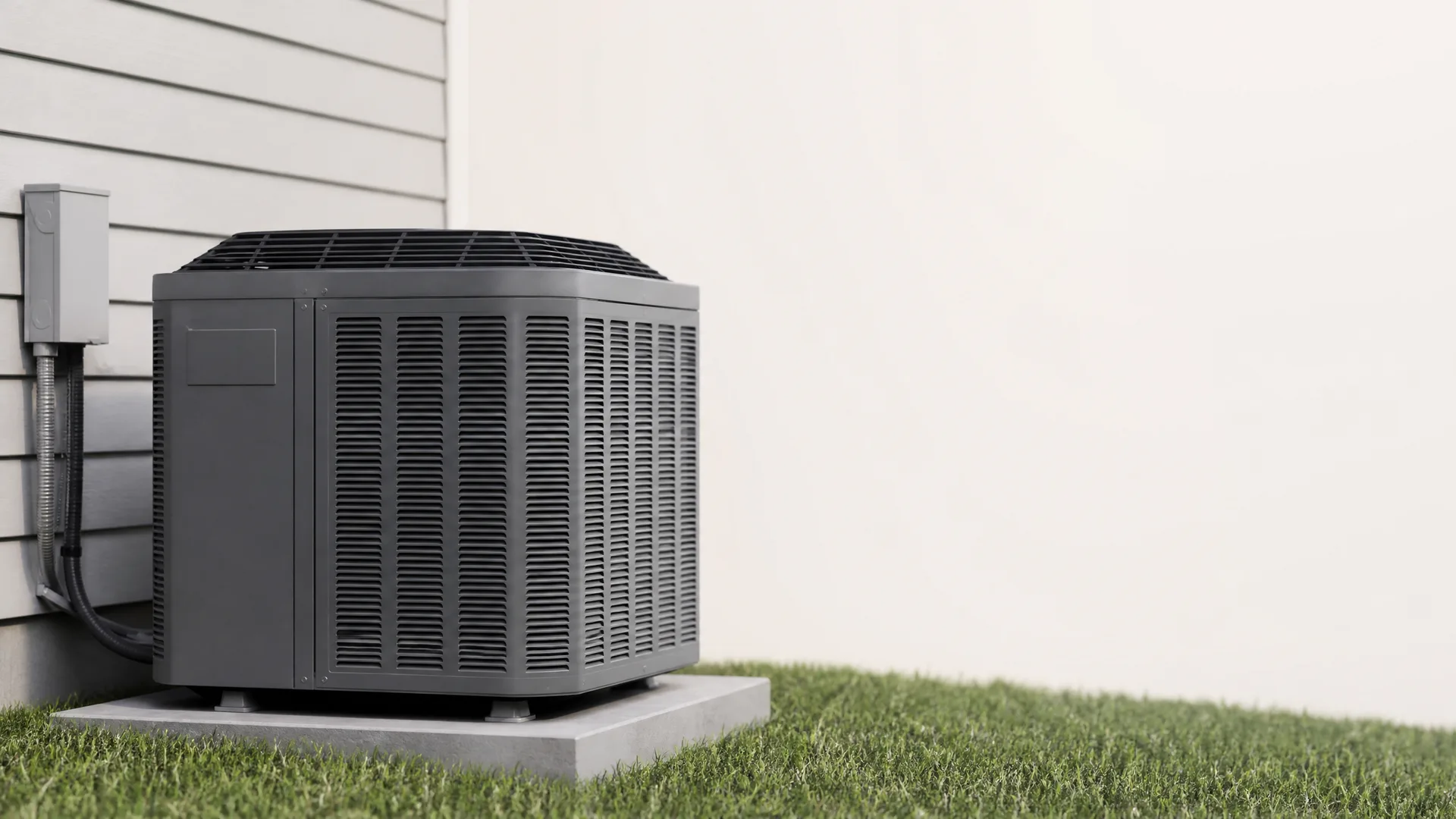
A gray outdoor air conditioner condenser unit on a concrete pad beside a house with horizontal siding and an electrical disconnect box, surrounded by grass.

Why defrost cycles add runtime

On cold, damp mornings the outdoor unit can frost over. The heat pump reverses itself for a few minutes to melt that off, then switches back to heating. During that reversal it may briefly blow cool air near the vents, which is normal and not a sign of trouble. This adds short stretches of runtime beyond what the thermostat alone would call for, especially overnight.

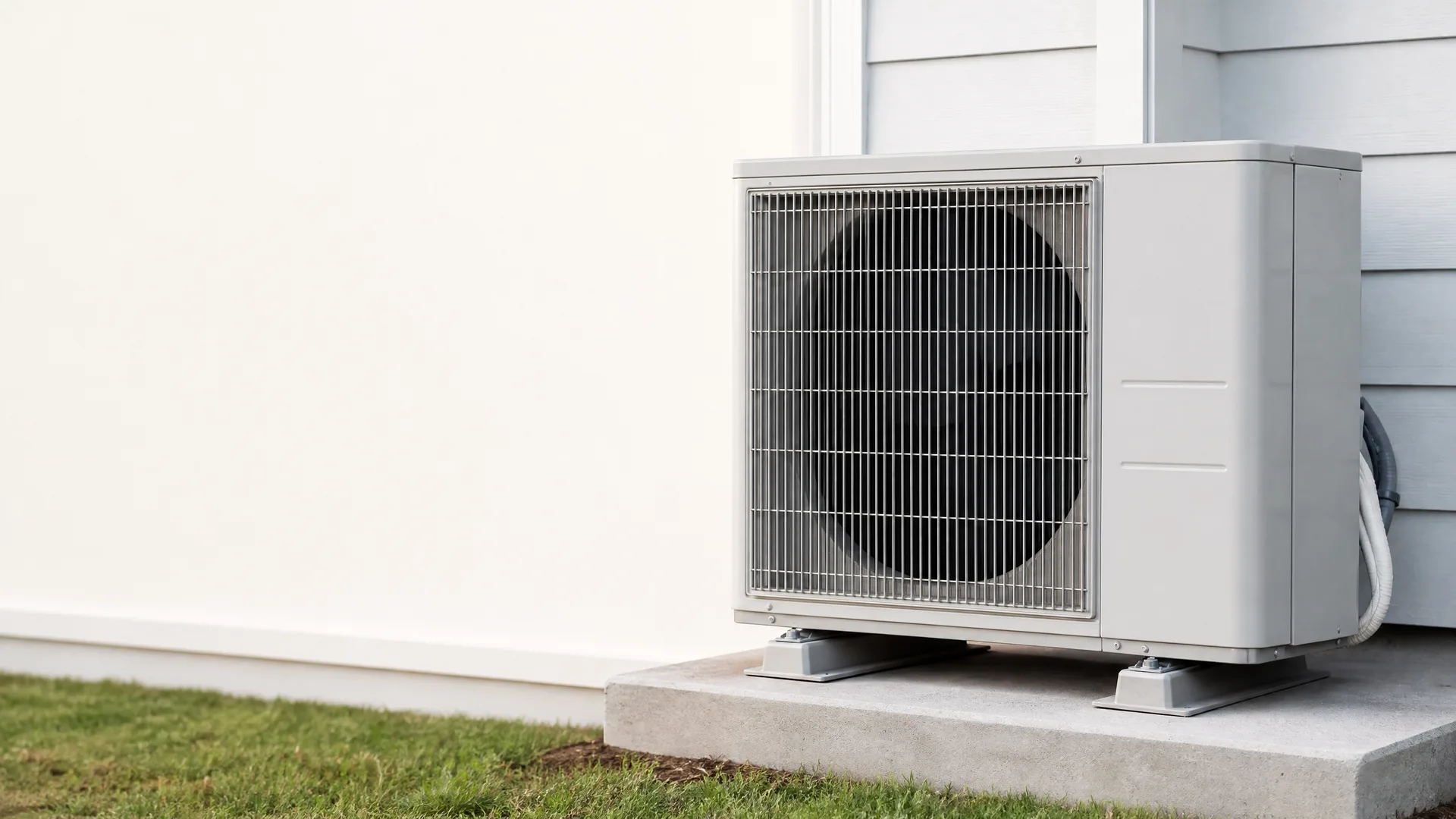
A white outdoor heat pump unit on a concrete pad beside a house with horizontal lap siding, with a plain light wall and grass lawn to the left.

What a short cycle really means

A heat pump that shuts off in five minutes and kicks back on soon after isn't resting properly between cycles. That pattern points to a thermostat sensing problem, a refrigerant charge that's off, or a filter restricting airflow. Left alone, short cycling wears the compressor faster and pushes the power bill up, since the unit works harder to restart than to keep running. Checking the filter first rules out the simplest cause.

How long should my heat pump run on a cold night?

You're up checking on the system during a cold snap, maybe the Central Valley tule fog has settled in or the desert night has dropped into the 30s. The heat pump seems to be running longer than you're used to, and you want to know if that's just what happens when it's cold out or a sign something needs looking at.

Longer runs on cold nights are normal, up to a point

On a cold night the heat pump has more ground to cover between outdoor air and indoor air, so it runs longer each cycle and defrosts more often than it would on a mild evening. A stretch of thirty to forty minutes before it shuts off isn't unusual when it's in the 30s outside. What's not normal is a unit that never shuts off at all, or one that runs that long and the house still isn't warm. That points to something making the system work harder than it should, like a low charge or a coil that isn't moving heat the way it's supposed to. A contractor who checks the system can tell you which one it is.

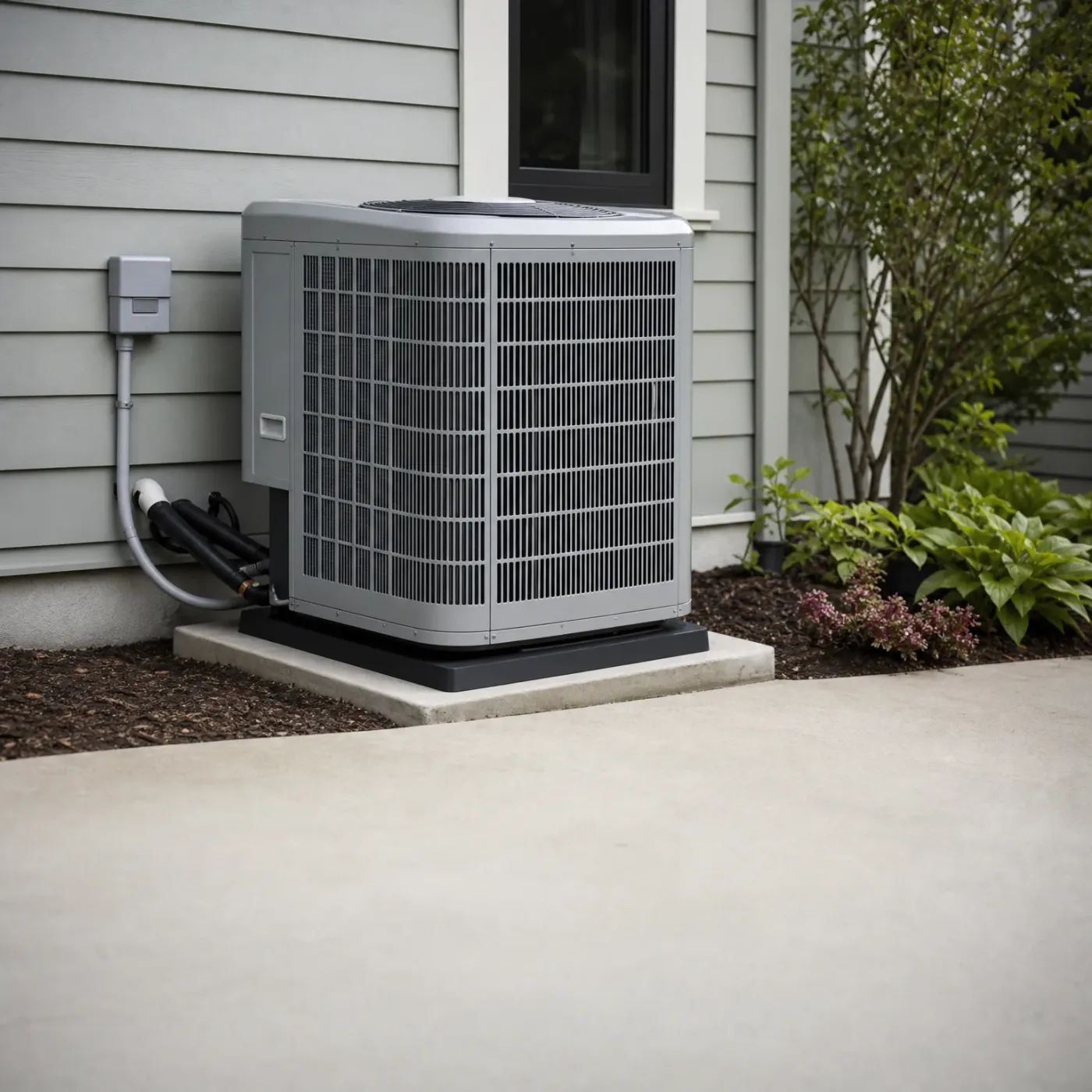
A gray outdoor condenser unit on a concrete pad beside a light-colored lap-sided house, with a wall-mounted disconnect box, refrigerant lines, mulch bed and shrubs, and a concrete walkway in the foreground.

Running the way it should

This unit cycles on, brings the house to temperature, and shuts off clean. No rust on the grille, no dirt packed around the base. Refrigerant lines run straight to the disconnect box without strain. A heat pump kept clear like this holds its short run times all winter instead of drifting longer.
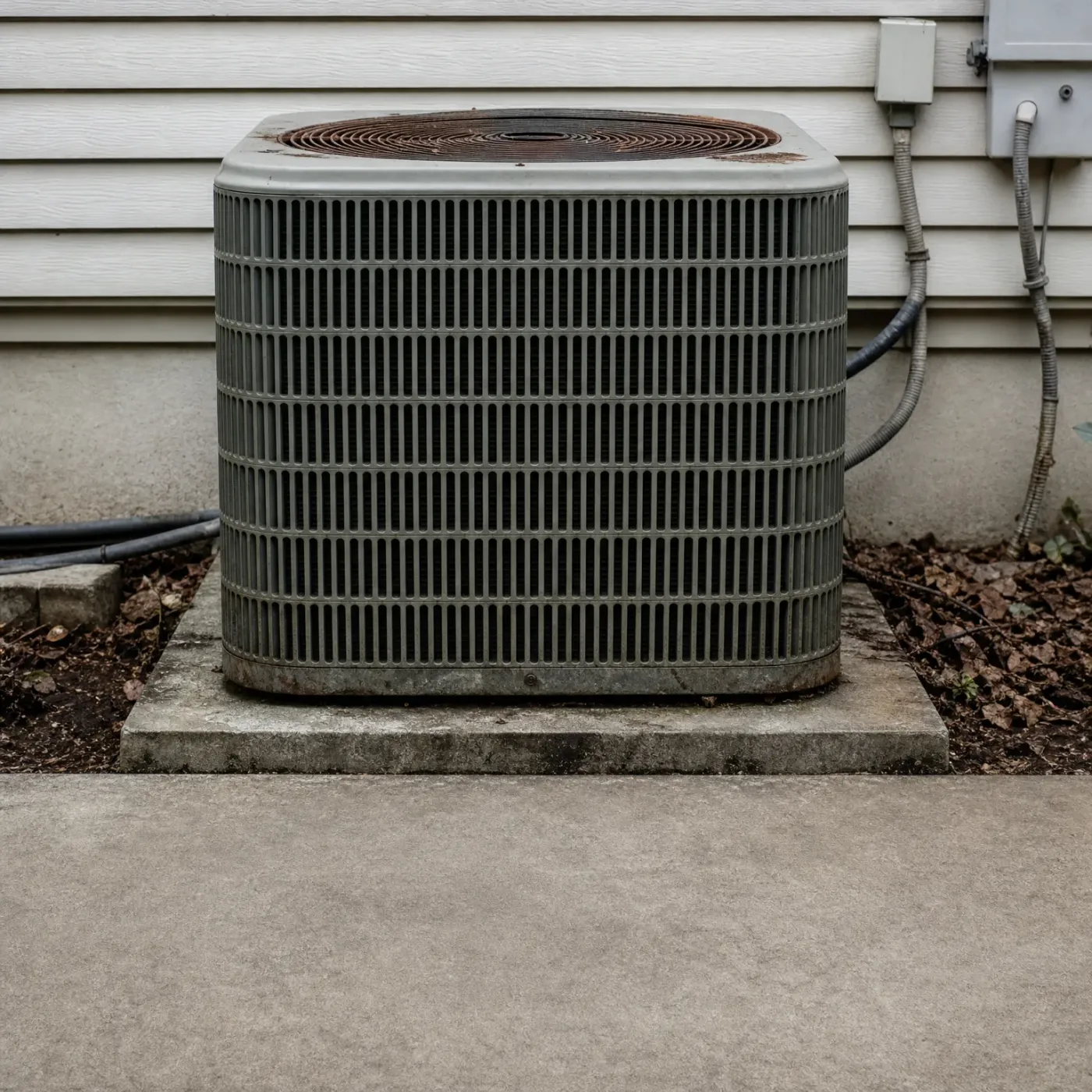

An outdoor air conditioner condenser unit with rust spots on its top grille sits on a concrete pad beside a house with light horizontal siding, with conduit lines and an electrical box on the wall and a mulch bed to the right.

Working harder than it should

Rust along the top grille and dirt built up around the base tell you airflow is restricted before the unit even starts. A heat pump fighting that pulls more power to hit the same temperature, and in California that shows up fast on the bill. Left alone, the strain only builds.

A woman wrapped in a thick beige fleece blanket sits on a sofa with an open book on her lap, beside a lit table lamp, with a frost-covered window behind her.
A gray-haired woman in a cream knit sweater stands in a dimly lit kitchen at night, looking to her right, with a round loaf of bread in the foreground and a dark window and potted plant behind her.
A gray outdoor condenser unit of an air conditioner or heat pump sits on a concrete pad beside a house with horizontal lap siding, with a wall-mounted disconnect box and conduit above it, mulched beds, shrubs and grass nearby.

Matched to your heat pump job

Fill out one form instead of calling around for a heat pump tune-up.

A local pro who services heat pumps gets in touch about the tune-up.

Start one form

Sending the form costs nothing.

Why does my heat pump seem to run on and off all evening?

You notice it most after dinner, when the house is quiet. The outdoor unit kicks on, runs a while, stops, then starts again twenty minutes later. If it's doing that every few minutes instead, or you hear it straining before it shuts off, that's worth paying attention to. A dirty coil or a low refrigerant charge makes the unit work harder to reach the same temperature, so it cycles more often and runs longer each time. Your power bill shows it before anything else does. Left alone, a unit that's struggling to keep up puts more hours on the compressor than it should, and that's the part that's expensive to replace. None of this means the system is failing tonight. It means it's telling you something.

A gray-haired bearded man in a dark coat and scarf dusted with snow stands smiling in a dimly lit entryway with a white front door, a side table with a lit lamp, an oval mirror, and a patterned rug.
An older bearded man in a dark snow-dusted coat and gray scarf stands just inside a dimly lit home entry, with a framed picture, lit table lamp, and an adjoining room with a fireplace behind him, and snow visible through the open door.
A gray-haired, bearded man in a dark snow-dusted coat stands smiling in a dimly lit entry hall with a staircase, a lit table lamp, a framed picture, and a living room visible through a doorway.
An older man with gray hair and a beard, wearing a dark jacket dusted with snow, stands smiling in a dimly lit hallway with lamps and a living room visible behind him.
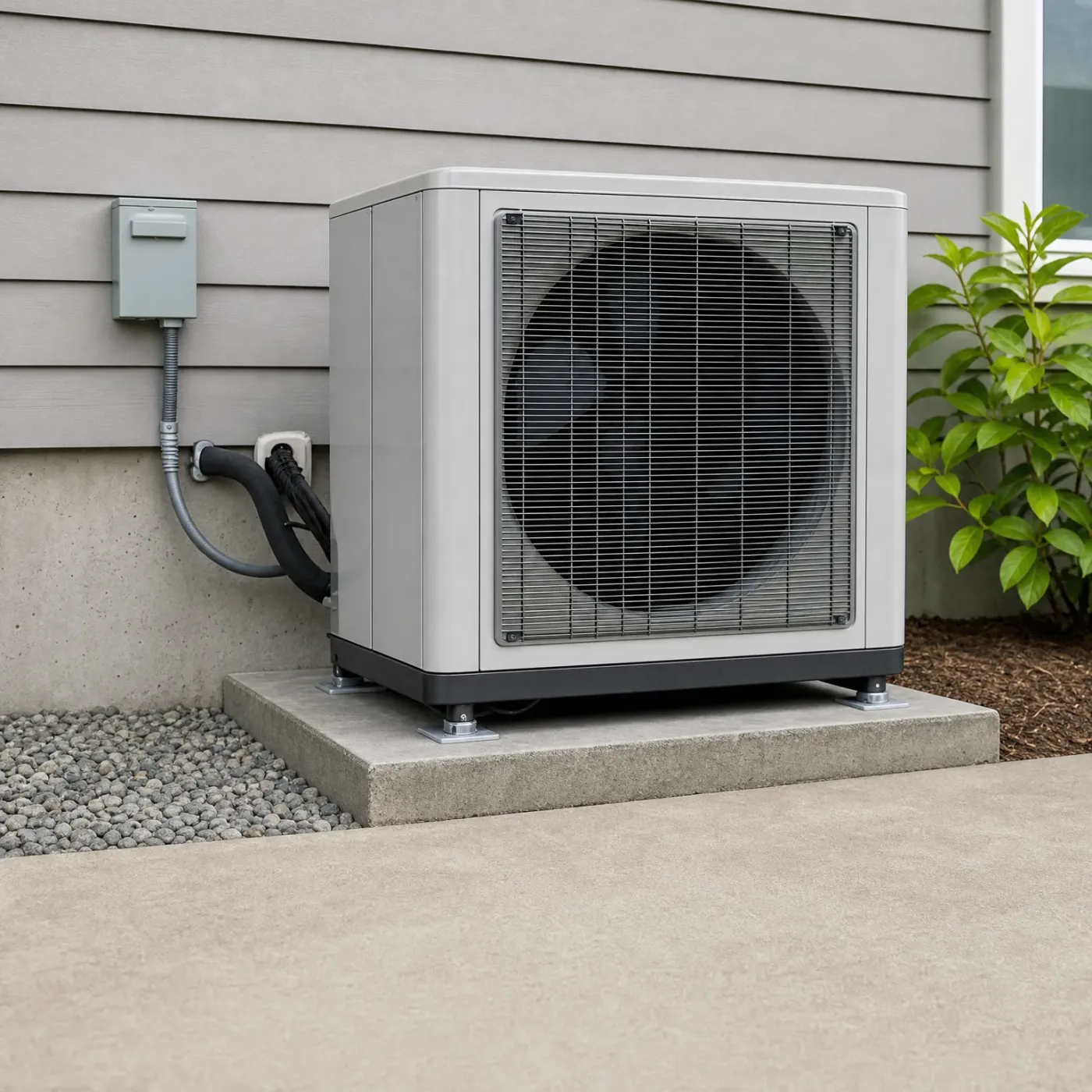
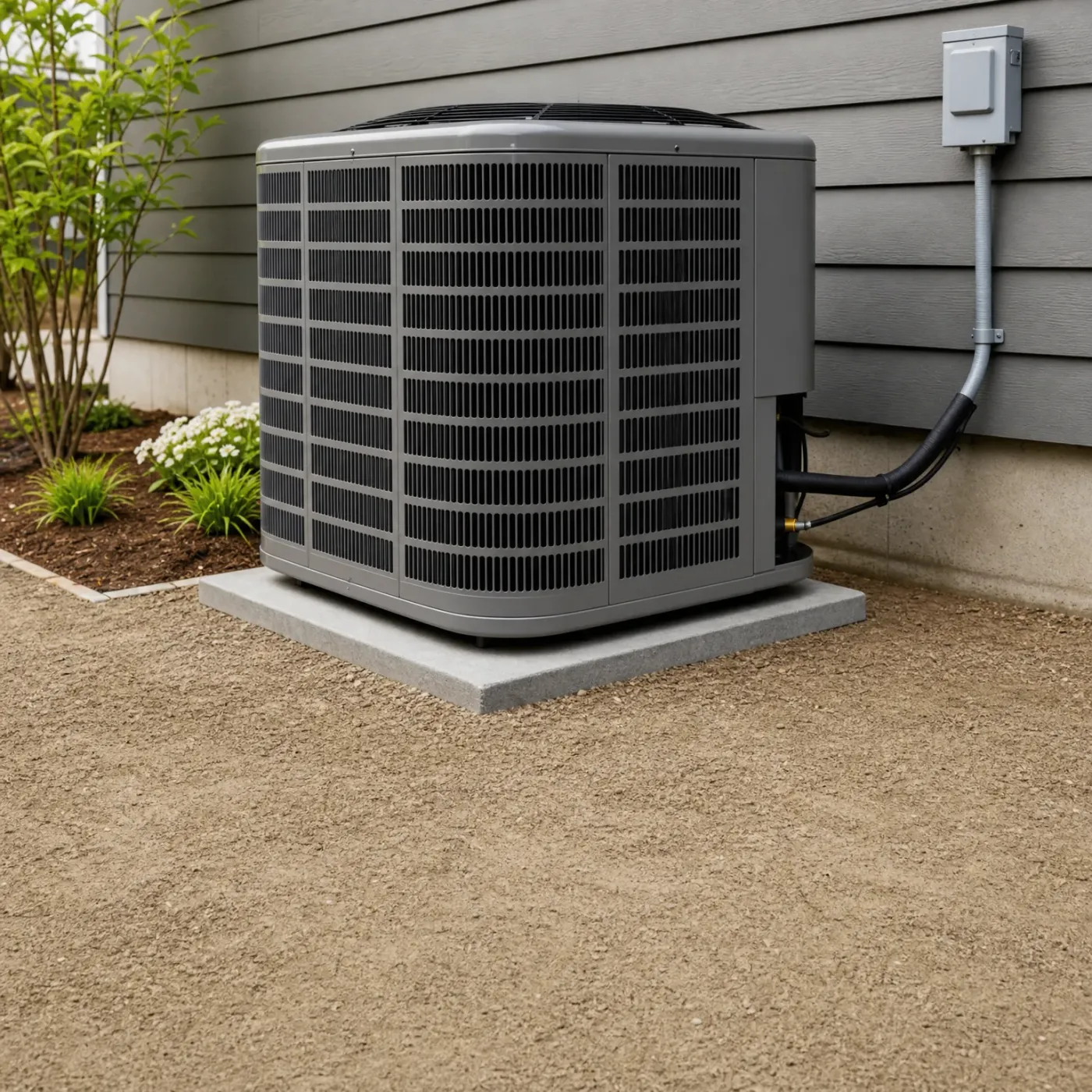
A light gray outdoor heat pump unit mounted on a concrete pad beside a house with horizontal lap siding, with refrigerant lines and conduit running to a wall-mounted electrical box, gravel and a leafy shrub nearby.
This one cycles quietly and shuts off clean once the house hits temperature, no strain on the lines running to the disconnect box.
An outdoor air conditioner condenser unit on a concrete pad beside a house with horizontal siding, with conduit, cables and an electrical box on the wall and mulch beds at either side.
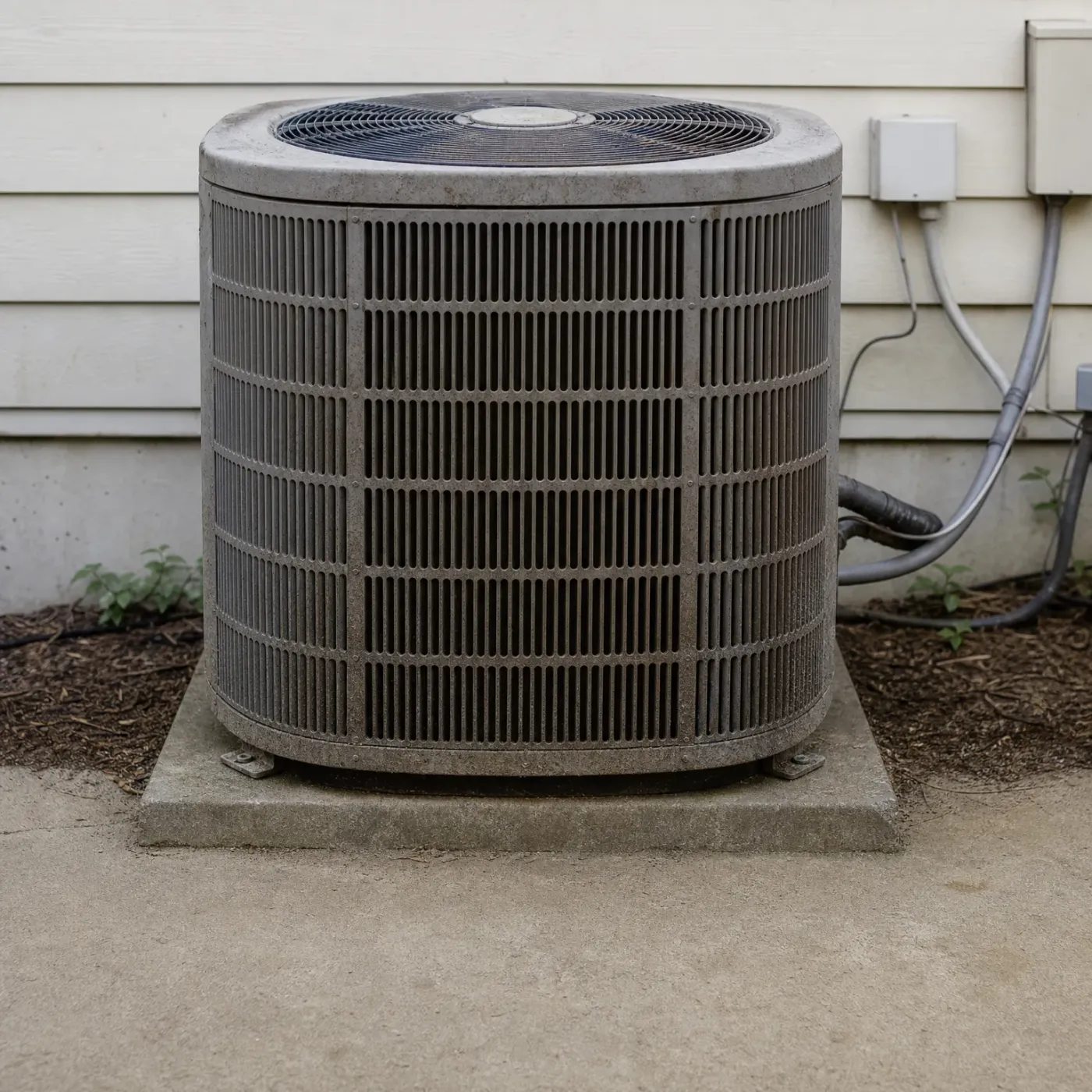
Dust and grime packed around the cabinet make the unit work harder and longer to move the same heat, which shows up on the power bill.
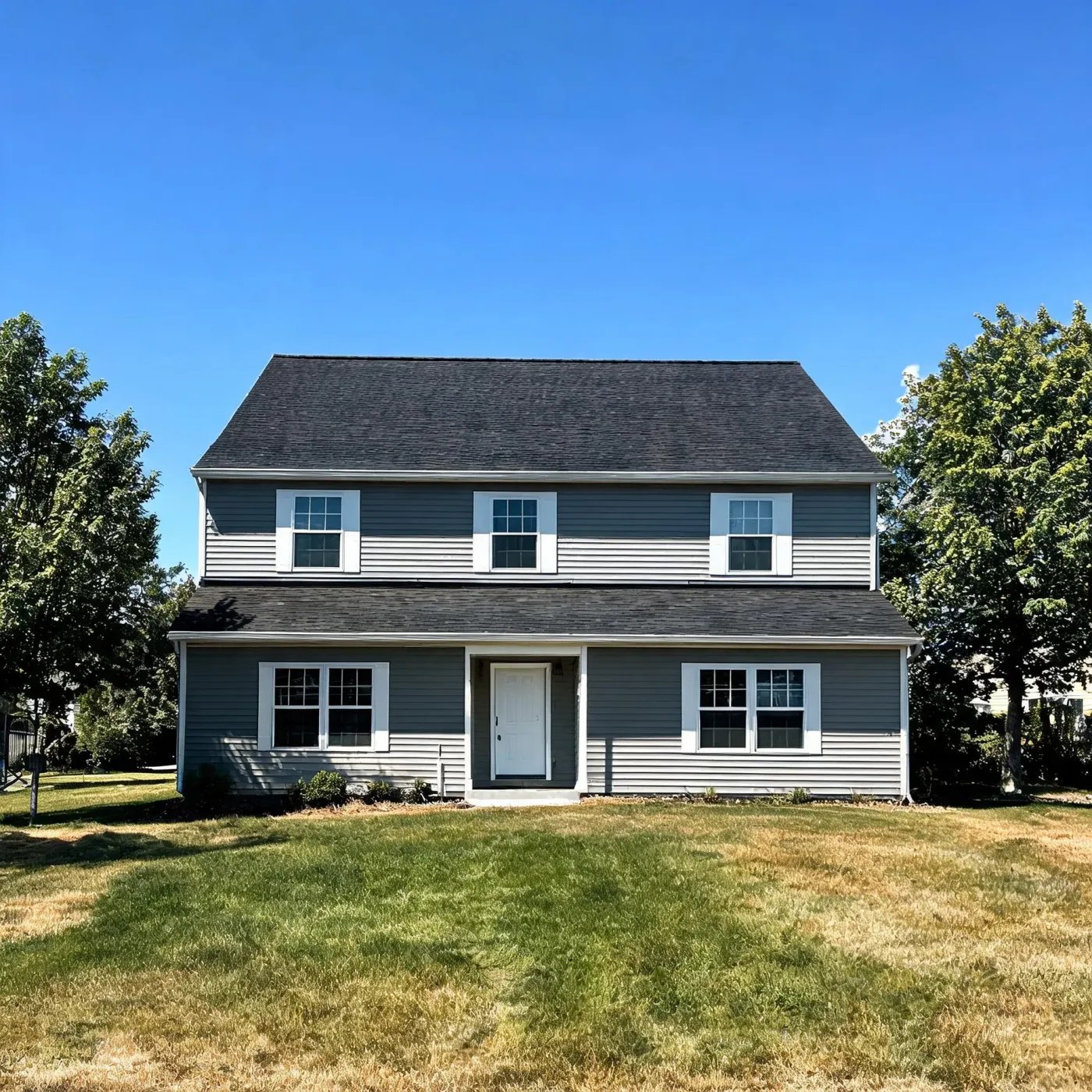
A two-story house with gray and light gray siding, white-trimmed windows and a white front door, flanked by deciduous trees, with a partly browned lawn in front under a clear blue sky.

A weather service average puts the summer dew point here at 50°F, which is why the air feels dry even on a hot day. That matters for a heat pump because the same coil doing your winter heating has to pull moisture out of the air every summer, and dry air gives it less of that work to do. Less load on the coil in summer means less wear carried into the months when the unit is heating your house. If yours is running long or uneven this winter, that's less likely to be heat and humidity catching up with it, and more likely something worth having a contractor look at directly.

NASA POWER T2MDEW county cells weighted by homes

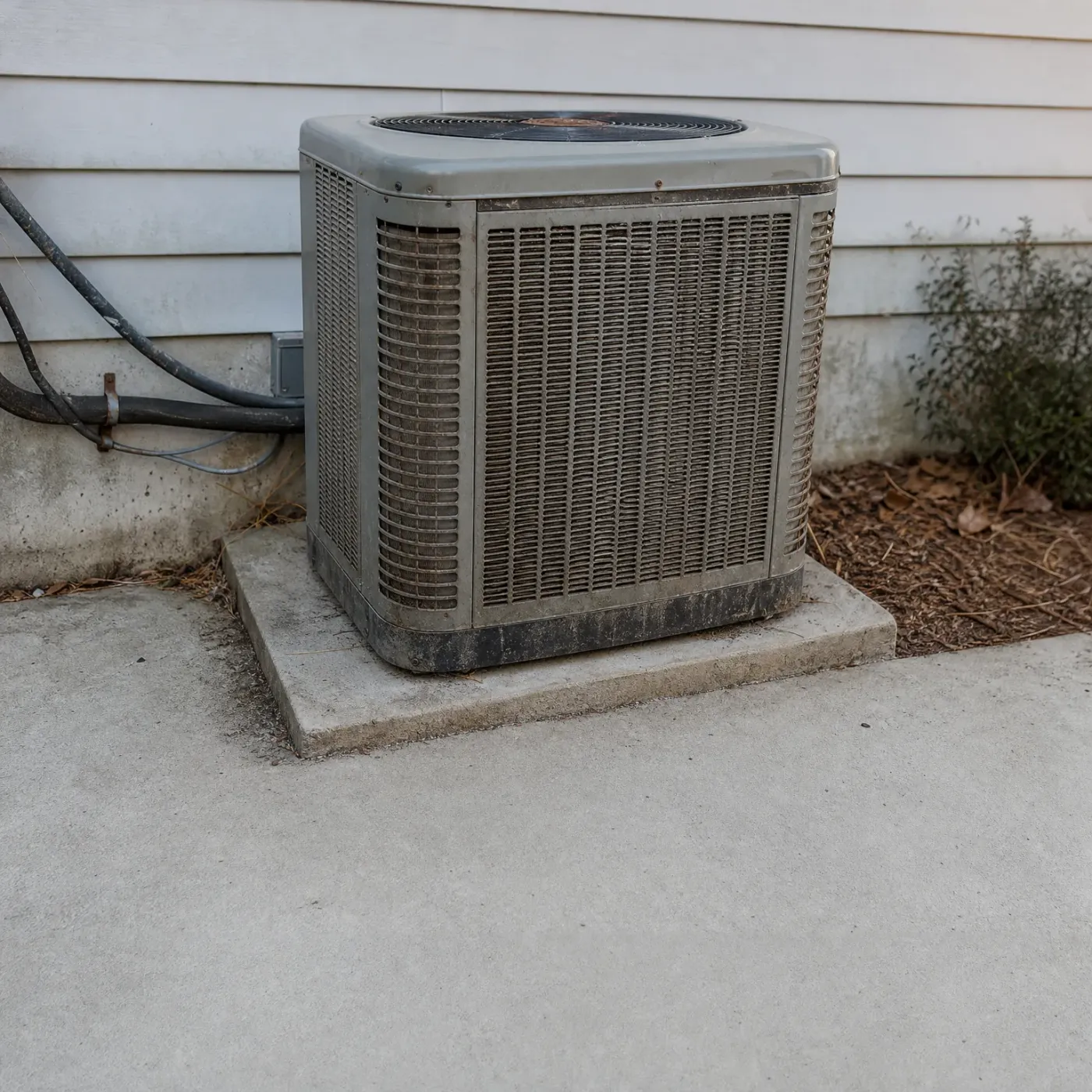
A weathered gray outdoor condenser unit sits on a concrete pad beside a house with horizontal siding, with refrigerant lines entering the wall at left and a mulched shrub bed at right.
Before you get your heat pump maintenance
A gray outdoor condenser unit on a concrete pad beside a house with horizontal lap siding, with an electrical disconnect box and insulated refrigerant lines on the wall, gravel in the foreground and a planting bed at left.
After you get your heat pump maintenance

Short cycles, clean shutoff

The unit runs ten to twenty minutes, warms the house, and stops. No long runs, no struggling to catch up on a cold night.

Skip calling around

Running longer than it used to

Cycles stretch past what you remember, or the unit short cycles every few minutes. Either way it's working harder for the same heat, and it shows on the power bill.

Skip calling around
A woman in a cream sweater and jeans stands in the open doorway of a white stucco house, holding the dark door, while a man in a dark quilted jacket seen from behind walks toward the entry past potted plants.

So how long should it run

On a normal California winter night, your heat pump should run in short stretches, warm the house, and shut off. Longer runs during a cold snap or a frosty morning are normal too. What isn't normal is a unit that runs long on a mild evening, or short cycles every few minutes, or a system that never quite catches up. That's the line between a heat pump doing its job and one that's working too hard to do it.

If what you're seeing doesn't match what's normal for the weather that night, it's worth having someone look at it before a bigger repair finds you first. Getting there usually means calling around to a few contractors, explaining the same thing more than once, and sorting through quotes that don't say the same thing twice. You can skip that part. Answer a few questions about your system and your heat pump, and a contractor who handles maintenance in your area will reach out to you directly.

Interior corner with a beige sofa holding a dark green and a light cushion and a textured throw, a potted small-leaved tree beside a white-framed window, and a dark shallow bowl on a wooden coffee table in the foreground.
A single-story stucco house at dusk with a lit paver walkway lined by low path lights, desert plants and boulders in front, and distant mountains under an orange and blue sky.

Heat Pump Maintenance

A local pro for your heat pump maintenance

Step 1 of 3: Equipment
  • A corner of a room with an upholstered wood-framed armchair holding a floral pillow, a round side table with a ceramic lamp, books and a vase of greenery, a framed landscape painting on the wall, a patterned rug, and a sunlit multi-pane window.
    • Describe your heat pump job, and a local pro who handles it gets in touch.
  • Interior corner with a wood-framed window showing green foliage outside, a framed landscape print on a beige wall, and a rounded stone vase of leafy branches on a wooden cabinet.
    • Send the form, and lining up the heat pump tune-up stops being yours to chase.
    • Send the form and the heat pump tune-up stops being something to remember.
  • A pale ceramic vase holding olive branches sits on a dark wooden countertop beside a carved wooden dough bowl, next to a wood-framed window and a light painted plank wall.
    • Fill out one short form instead of calling around.
    • Explain the job once and skip repeating it on every call.
  • A dark wood round side table holding a brass lamp with a cream shade, a blue-and-white patterned bowl, and a white textured pot of greenery, beside an upholstered chair with a gray patterned cushion and a white-framed window showing green trees and flowering shrubs.
    • A licensed local pro takes the request for your heat pump tune-up.
    • The pro who reaches out is licensed in California.