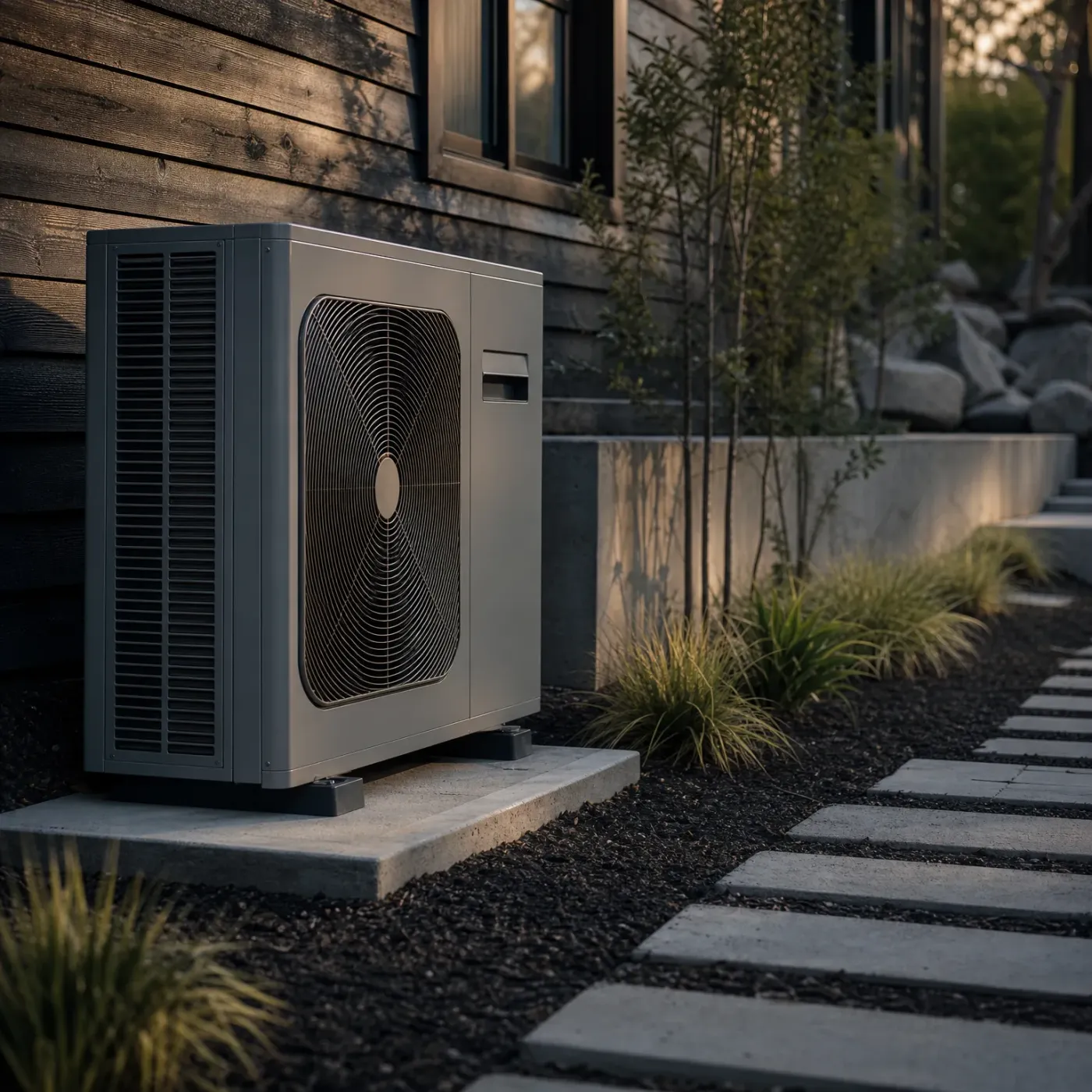




A gray outdoor heat pump unit with a circular fan grille sits on a concrete pad beside a dark wood-clad house, next to a gravel bed with ornamental grasses and a stepping-stone path.

A local pro for your heat pump repair

Why your heat pump fan won't spin in California

A heat pump fan that won't turn can mean a few different things, from a stuck motor to a control board that isn't sending power where it should. This page walks through what usually causes it and what to check first. If you'd rather hand it off, you can get matched with a local contractor who works on heat pumps regularly and knows what tends to fail.

Get matched

A heat pump fan that won't spin is usually the outdoor unit, not the indoor air handler, and the cause is almost always one of three things: a seized or burned-out fan motor, a bad capacitor that can't give the motor its starting kick, or a control board that isn't sending power to the fan at all. Sometimes the blades turn freely by hand but the motor hums and won't start on its own, which points to the capacitor. If the motor feels stuck or hot to the touch, the motor itself has likely failed. If nothing happens at all, no hum, no movement, check whether the unit is getting power before assuming the worst. None of these fix themselves, and a fan that won't run means the outdoor coil can't reject heat properly, which in a California summer means the system works harder for less cooling, even though the heat here isn't the heavy, humid kind that makes it obvious right away.

A woman in a gray turtleneck sweater stands by a window looking outside at snowy ground, with a dimly lit living room containing a sofa, shelves, lamp and a lit candle behind her.
A woman in a cream cable-knit turtleneck sweater stands in a warmly lit living room with a fireplace and shelves behind her, looking out a window toward snow-covered trees and a railed deck.
A woman in a cream knit turtleneck sweater stands by a window looking out at snow, with a lit fireplace, sofa and lamp in the room behind her.
A woman in a gray knit sweater sits by a window looking out at falling snow, with a dimly lit living room containing a sectional sofa, pillows, a lamp and houseplants behind her.
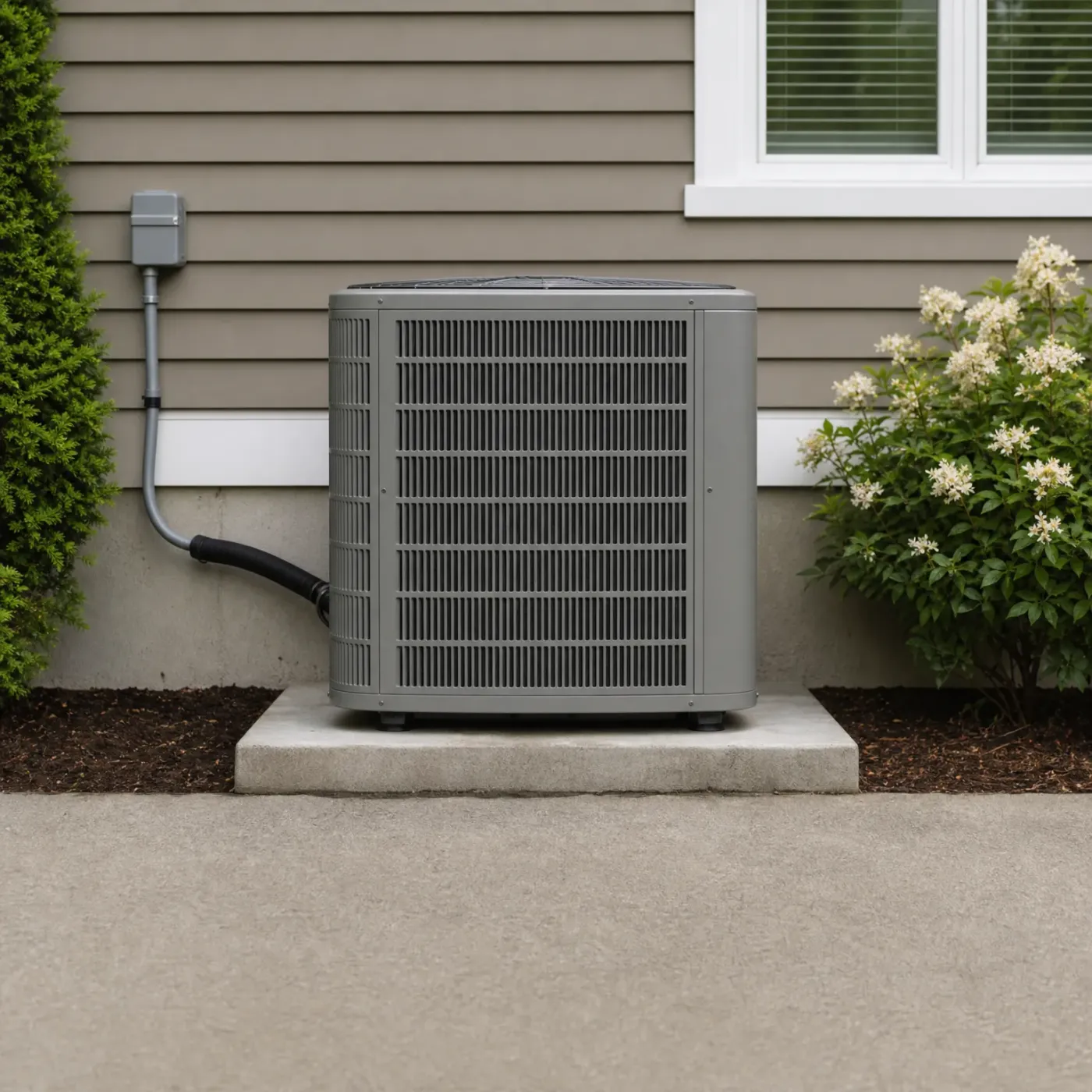
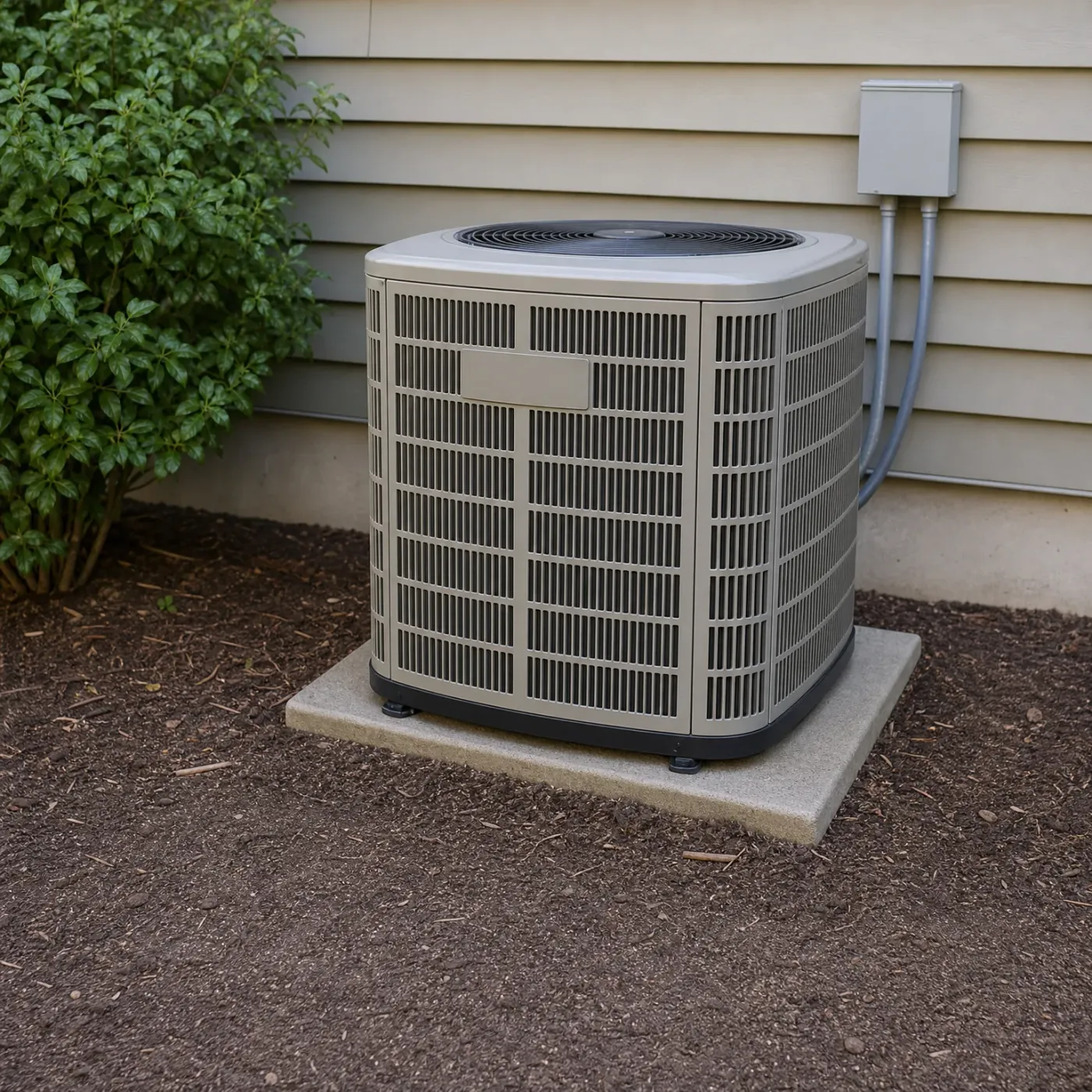
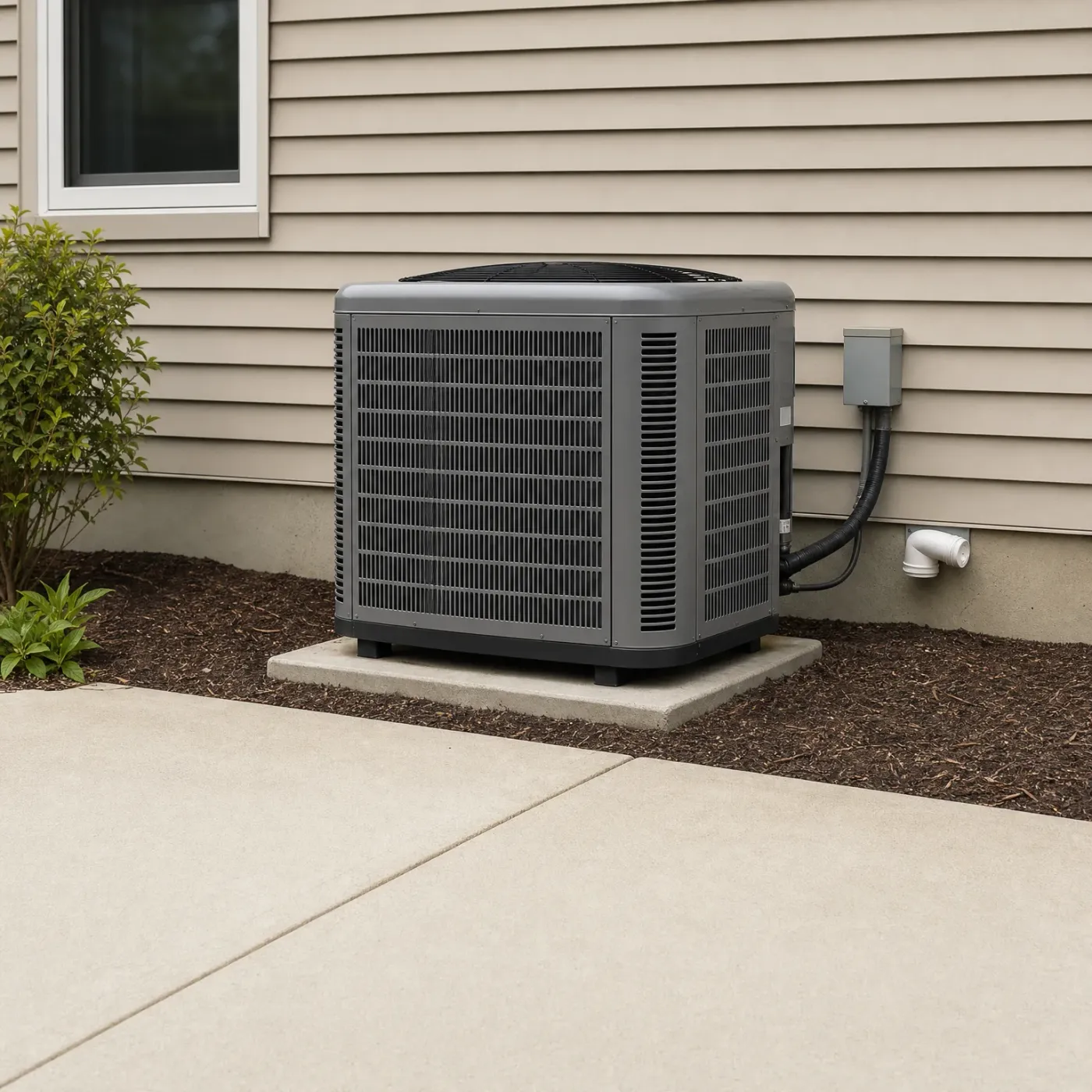
A gray outdoor condenser unit on a concrete pad beside a beige vinyl-sided house, with a wall-mounted disconnect box, flexible conduit, mulch bed, shrubs and a concrete walkway in front.

Fan spinning freely

This is what you want to see outside. The fan pulls air through the coil without hesitation, the unit cycles on when it should, and the motor isn't straining to get started. Dust and debris stay off the coil fins, which is half the battle in keeping that motor from working harder than it needs to.
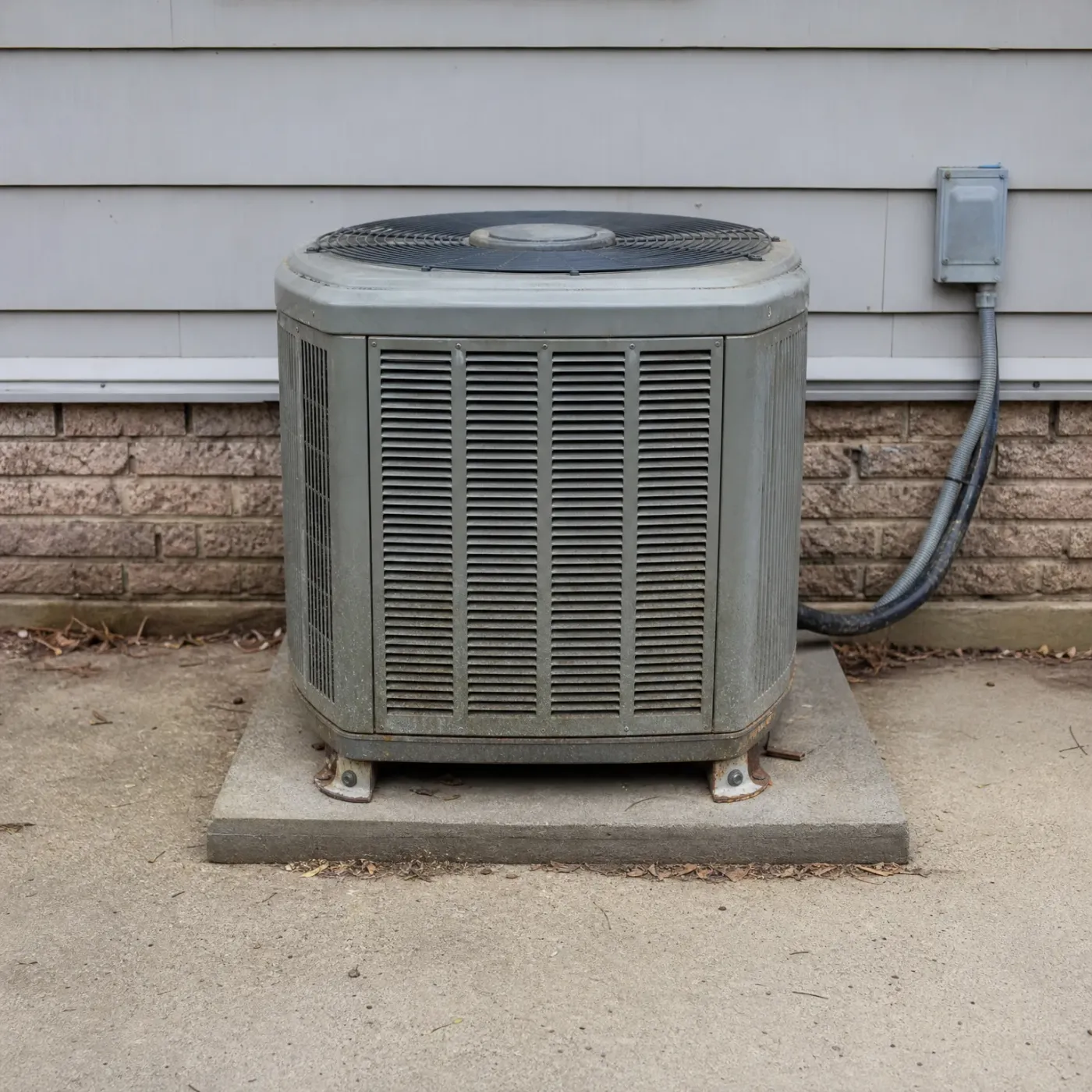

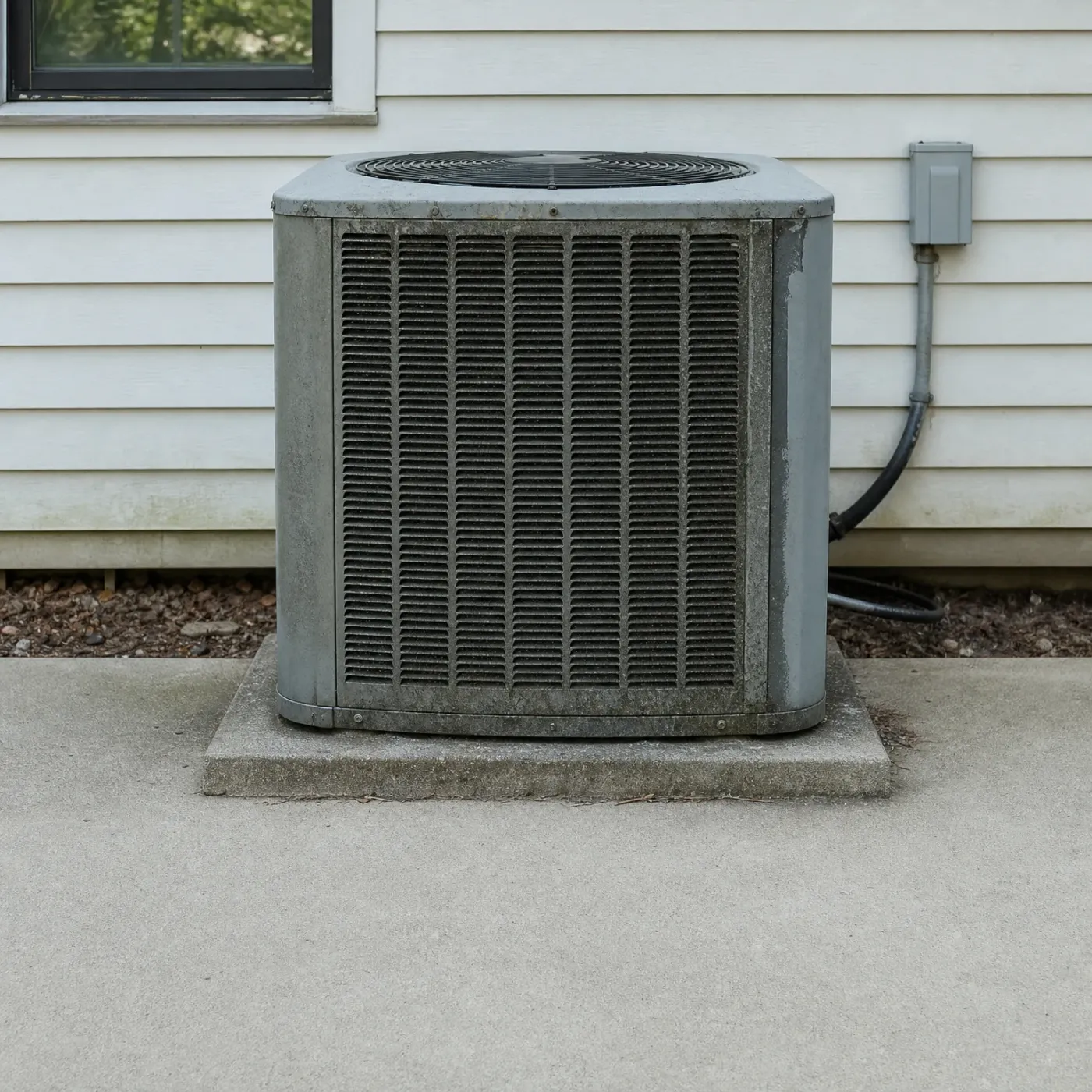
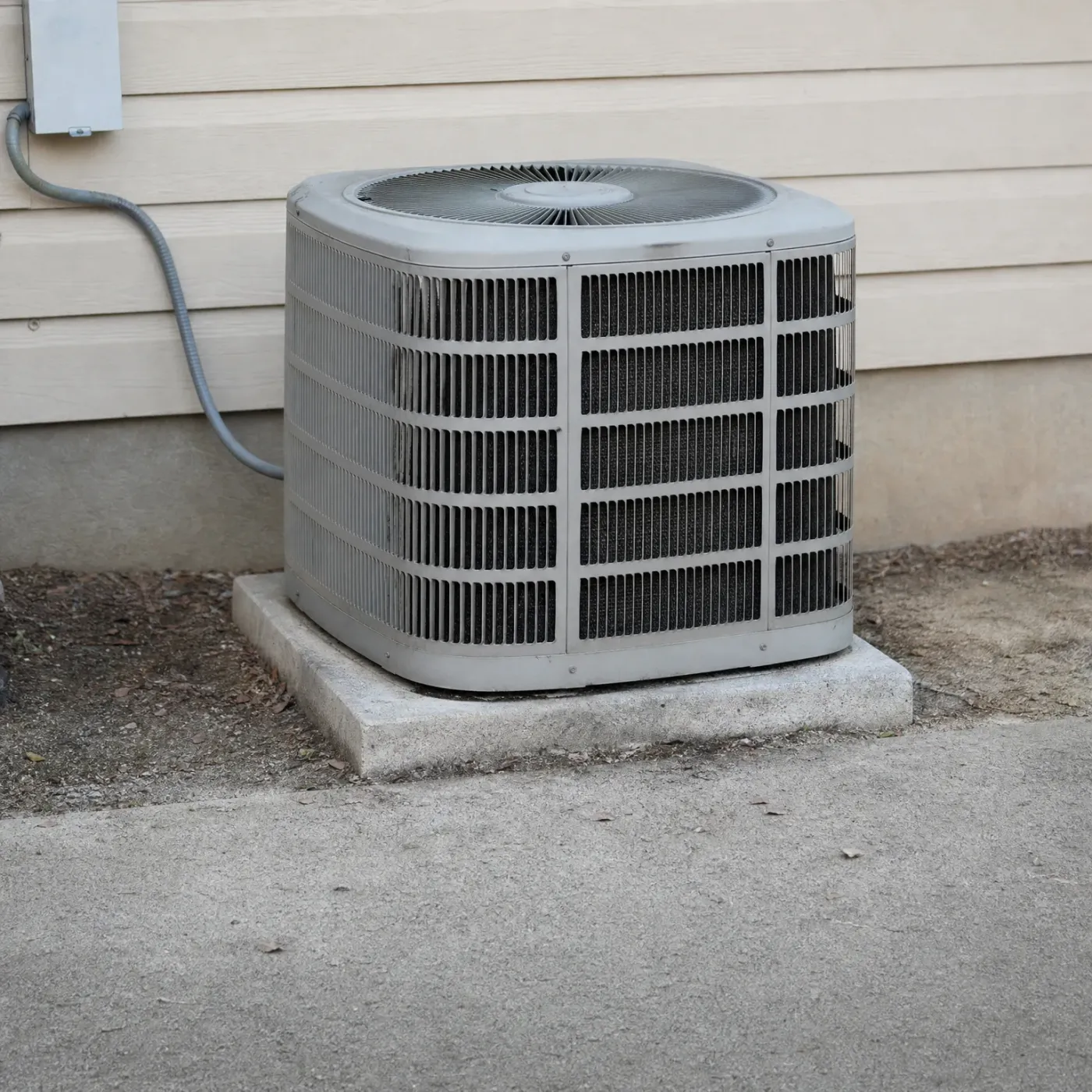
An outdoor air conditioning condenser unit on a concrete pad beside a house with horizontal siding above a brick foundation, with a flexible conduit running to a wall-mounted disconnect box.

Fan not turning

A coil caked with dust and grime like this makes the motor and capacitor work harder every time the unit tries to start, and that strain is often what pushes a weak part the rest of the way to failure. If the blades aren't moving at all, something upstream of the motor has already given out.

A man seen from behind raises his hand to wave at a woman standing in the open front doorway of a single-story house with gray shingle siding, white columns and a gabled porch entry.

A stalled fan does the same job a closed vent does

When the outdoor fan won't spin, the heat pump can't move heat across the coil, and the compressor often keeps trying anyway. On a mild California afternoon you might not notice right away. You'll notice on the electric bill, because power here already costs more than most of the country, and a unit working against itself runs longer to do less. If this drags on, the compressor can take damage that costs a lot more to fix than a motor or a capacitor would have.

You're the kind of homeowner who catches things early, so you probably already heard it before you saw it: a hum from the outdoor unit with no fan turning, or a motor that kicks on and off. That's worth acting on now. A contractor who works on heat pumps all year in your area has likely seen this exact failure on this exact equipment more than once, and knows which part tends to go first. Ask to be matched with one, and only one contractor reaches out, not several.

A living room corner with a beige upholstered armchair holding navy and striped cushions, a small round wooden side table with a carved bowl and a potted green plant, a framed landscape picture on a pale wall, built-in shelving, and a curtained window.
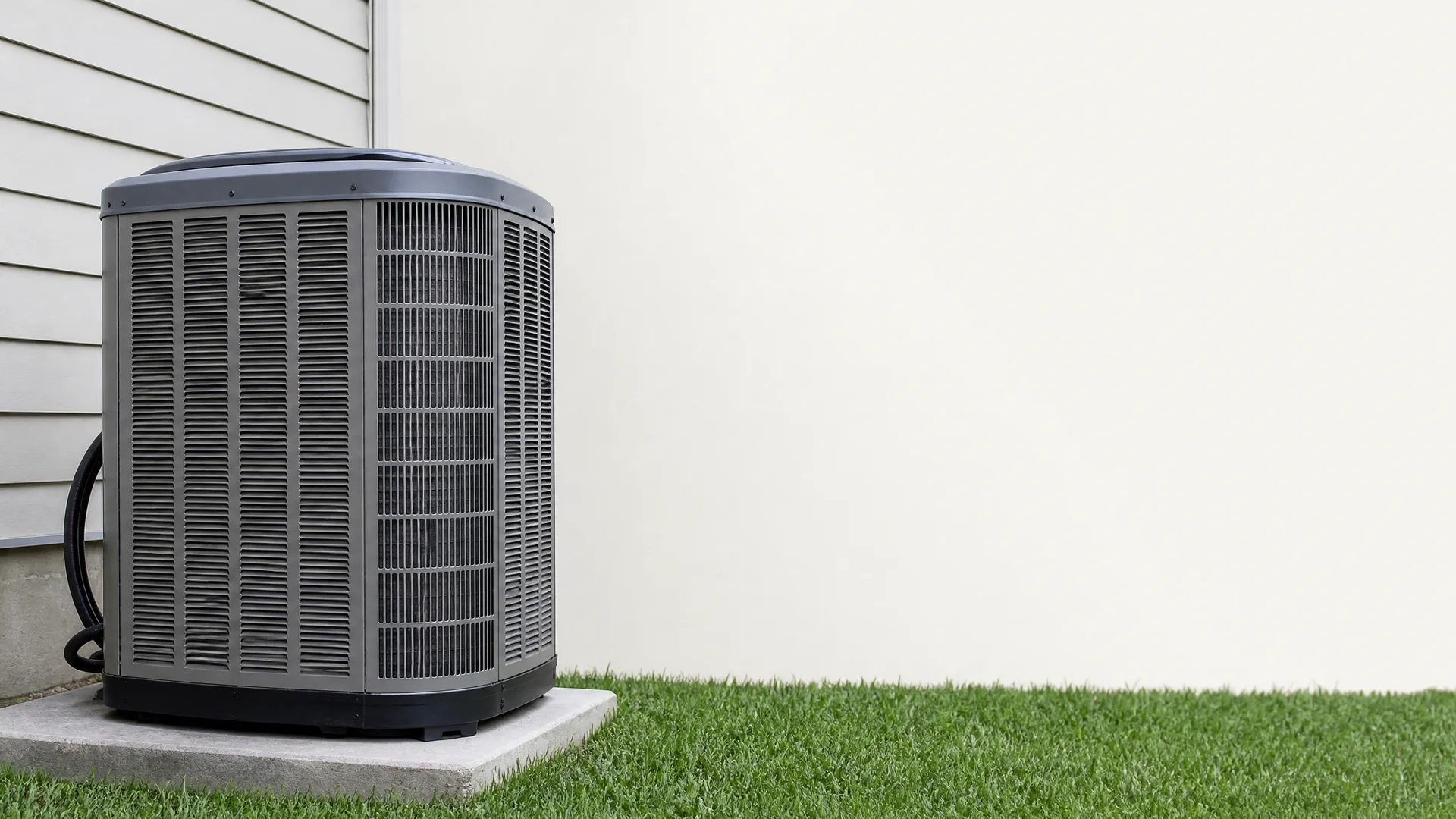
A gray outdoor air conditioning condenser unit on a concrete pad beside a house with horizontal siding, next to a green lawn and a plain light-colored wall.

The capacitor fails quietly first

The capacitor gives the fan motor its push to start turning. When it weakens, the motor hums but doesn't spin, or it spins slow and labors. You might hear that hum from outside before the fan ever stops for good. A technician can test a capacitor's output in minutes and knows within range whether it's holding or gone. It's a small part, and swapping it out doesn't mean anything else in the unit is wrong.

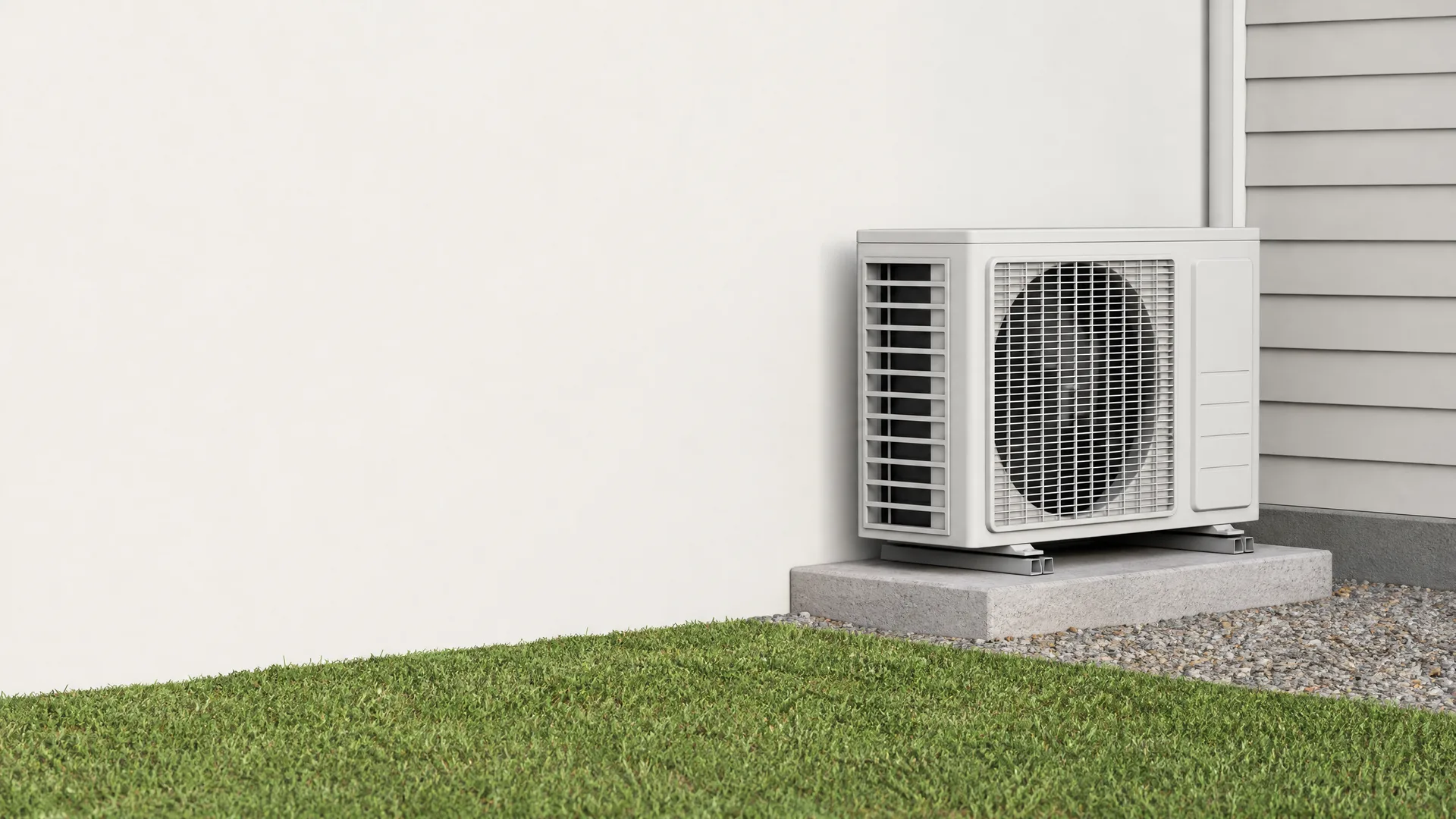
A white outdoor heat pump unit on a concrete pad beside a plain light wall, with gravel and mowed grass in front.

The compressor doesn't know to stop

The compressor and the fan are separate motors, so one can fail while the other keeps running. That's why a heat pump can sit outside compressing refrigerant with a dead fan and no airflow across the coil. Left alone, that raises pressure in the system and strains the compressor, which costs far more to replace than a motor or capacitor. Catching the fan problem early is what keeps it a fan problem.

Power costs 31.35 cents per kilowatt-hour statewide

At 31.35 cents a kilowatt-hour, a heat pump fighting a stalled fan costs you more every hour it runs that way. The compressor keeps drawing power without moving any heat, and in California that waste shows up fast on the bill.

EIA-861 2025 statewide residential average

A gray outdoor air conditioning condenser unit on a concrete pad beside a house with light vinyl siding, with a gray electrical disconnect box and conduit on the wall to the right.
Before you get your heat pump repair
A gray outdoor condenser unit on a concrete pad beside a house with horizontal lap siding, a conduit and disconnect box on the wall, a shrub with white flowers at right and evergreen foliage at left.
After you get your heat pump repair
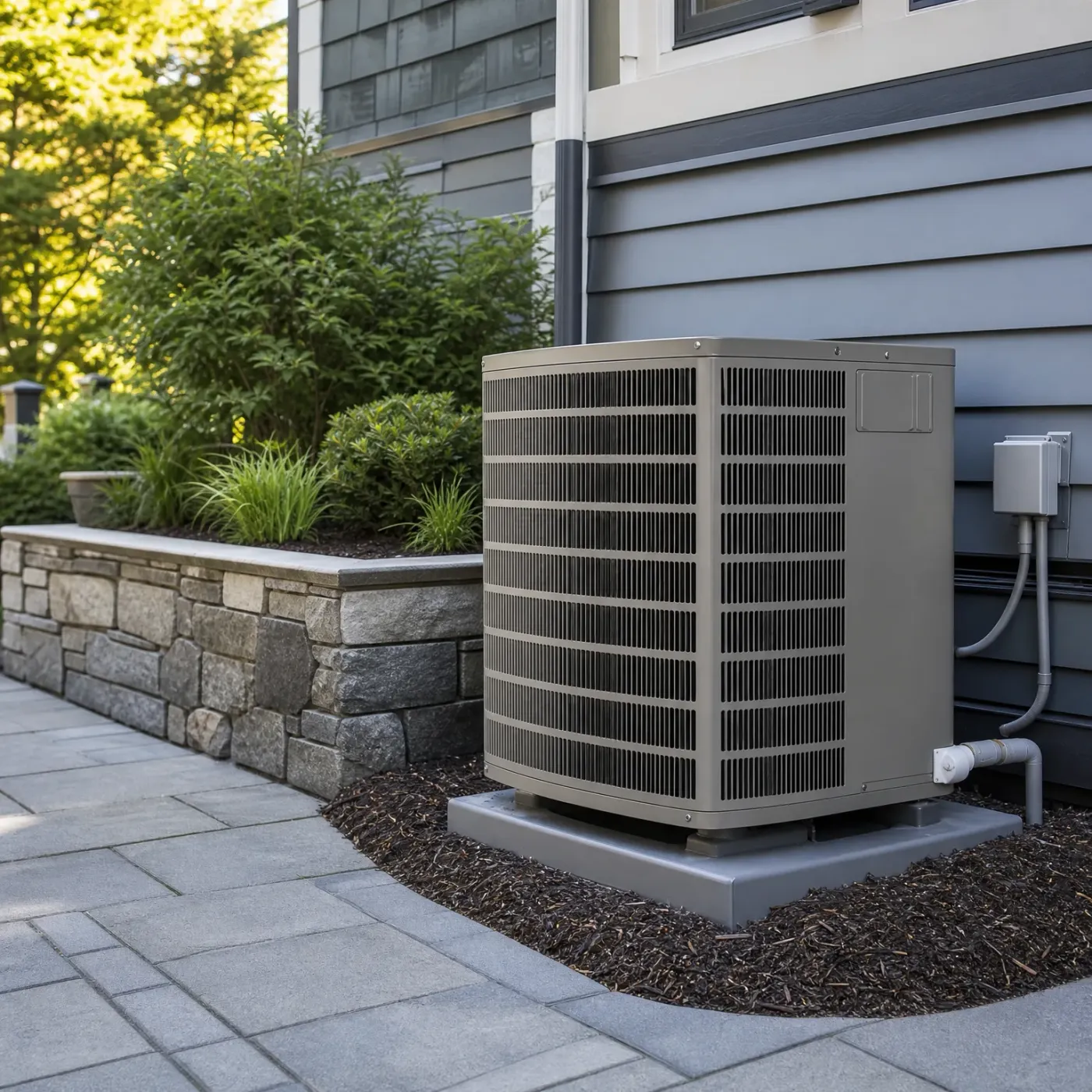
A beige outdoor condenser unit on a gray pad beside a house with gray horizontal siding, with refrigerant lines and an electrical disconnect box on the wall, bordered by dark mulch, a stone retaining wall with shrubs, and a paver walkway.

Get the right pro for your heat pump

The pro who reaches out is licensed in California.

Say what's going on with your heat pump, and a pro who works on them reaches out.

Find a heat pump pro

There's no charge for the request.

Can I just manually spin the fan blade myself to get it going?

It seems like it should work the same way you'd spin a bike wheel or a ceiling fan by hand to get it started. If the motor's just stuck, a push might be all it needs, and that beats waiting around for a repair call, especially if the unit is still running the compressor and you're worried about the cost of that.

Don't, the power to that unit needs to be off first

The outdoor unit has power running to it even when the fan looks dead, and that fan blade is tied directly to a motor shaft that can start turning the moment current reaches it. Reaching in while it's live risks a bad cut, and if the motor is seized rather than just stuck, forcing the blade can bend it or snap the mount. If you want to check whether it spins freely, the breaker for the outdoor unit needs to be off first, then you can turn the blade by hand to see if it moves smoothly or catches. Either way, a seized motor or bad capacitor still needs a technician to fix.

  1. Power reaches the outdoor unit and the thermostat calls for heat.

  2. The control board sends voltage to the fan motor.

  3. The capacitor delivers the jolt that starts the motor turning.

  4. The motor spins the blade and pulls air across the coil.

A beige outdoor air conditioning condenser unit on a concrete pad beside a house with horizontal vinyl siding, with refrigerant lines and a disconnect box on the wall, surrounded by dark mulch and a green shrub at left.
A grey conduit runs clean from the disconnect box to a fan that starts the moment the thermostat calls.
An outdoor air conditioner condenser unit on a concrete pad beside a house with beige horizontal siding, with conduit running from an electrical box on the wall.
Same conduit, same disconnect, but the fan sits still, and that stall is what a local tech checks first.

Where This Leaves You

  • A heat pump fan that won't spin almost always traces to a seized motor, a weak capacitor, or a control board not sending power.
  • The outdoor unit is where the problem lives, not the indoor air handler.
  • A stalled fan doesn't stop the compressor, so it keeps drawing power while moving no heat at all.
  • Trying to spin the blade by hand only helps if the motor is stuck, and it won't tell you whether the capacitor or board is also failing.
  • Left alone, a stuck fan motor tends to burn out rather than loosen up on its own.
  • A local technician who works on these units checks the capacitor and board first, since those cause most stalls.

A heat pump fan that won't turn comes down to one of three parts: the motor, the capacitor, or the control board. Most of the time it's the capacitor, since that part wears out well before the motor does. The board is the least common cause but the hardest to check without meter in hand. None of this is something you can watch and wait out. The compressor doesn't know the fan has stopped, so it keeps running and drawing power with nothing to show for it, and on California rates that adds up fast even over a few days. Spinning the blade by hand might free a motor that's just stuck, but it does nothing for a bad capacitor or a board that isn't sending voltage, and you won't know which one you're dealing with from outside the unit. What you can know is that waiting makes the motor problem worse. A motor that's straining to start on a weak capacitor is working harder than it should every time it cycles, and that kind of strain is what burns a motor out rather than lets it recover. A technician who works on heat pumps through the year has seen this exact stall more times than not, and checks the capacitor and board before anything else, because that's where it usually is. Getting someone out to look at it while it's still one of those two parts is a smaller job than replacing a motor that gave out from running stressed.

A bearded man in a plaid flannel shirt stands in a kitchen looking out a window toward snow-covered shrubs, with a steaming mug on the windowsill and potted plants on a shelf behind him.
A smiling man with dark curly hair in a navy t-shirt sits on a gray couch indoors, with a large-leafed plant and a window in the background.

Heat Pump Repair

A pro who works on heat pumps

Only one pro gets your request, so you hear from one company.

A black-framed smartphone standing upright against a plain white background, its screen filled with solid green.
Step 1 of 3: Equipment