Why your heat pump is blowing lukewarm air in California

Tell a local repair pro what your heat pump is doing.

Find a pro near me

Lukewarm air from a heat pump usually means it is stuck in a low mode it can't get out of, or it's losing the battle against refrigerant or airflow problems. A dirty filter or blocked outdoor unit cuts down the air moving across the coil, so what comes out of your vents feels barely warm. Low refrigerant does the same thing from the inside, since the system needs the right charge to move heat properly. A failing reversing valve can leave it caught between heating and cooling, blending the two. Since California summers run warm but dry, a heat pump struggling this way often gets overlooked until the air feels off enough to notice. Left alone, it keeps running without doing its job, and your power bill reflects the extra hours it takes to reach the temperature you set. A licensed technician can check the charge, the valve and the airflow to find which one it is.

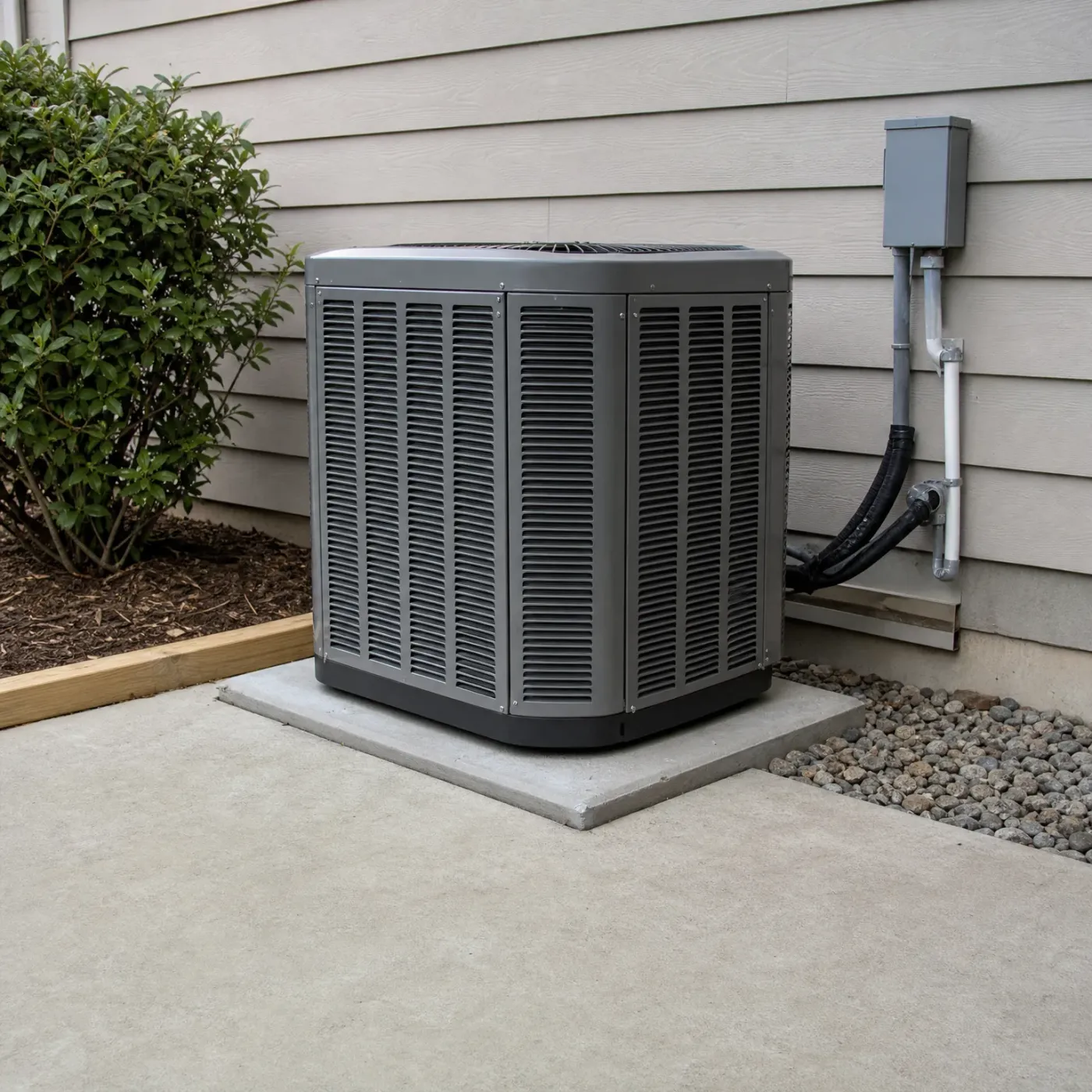
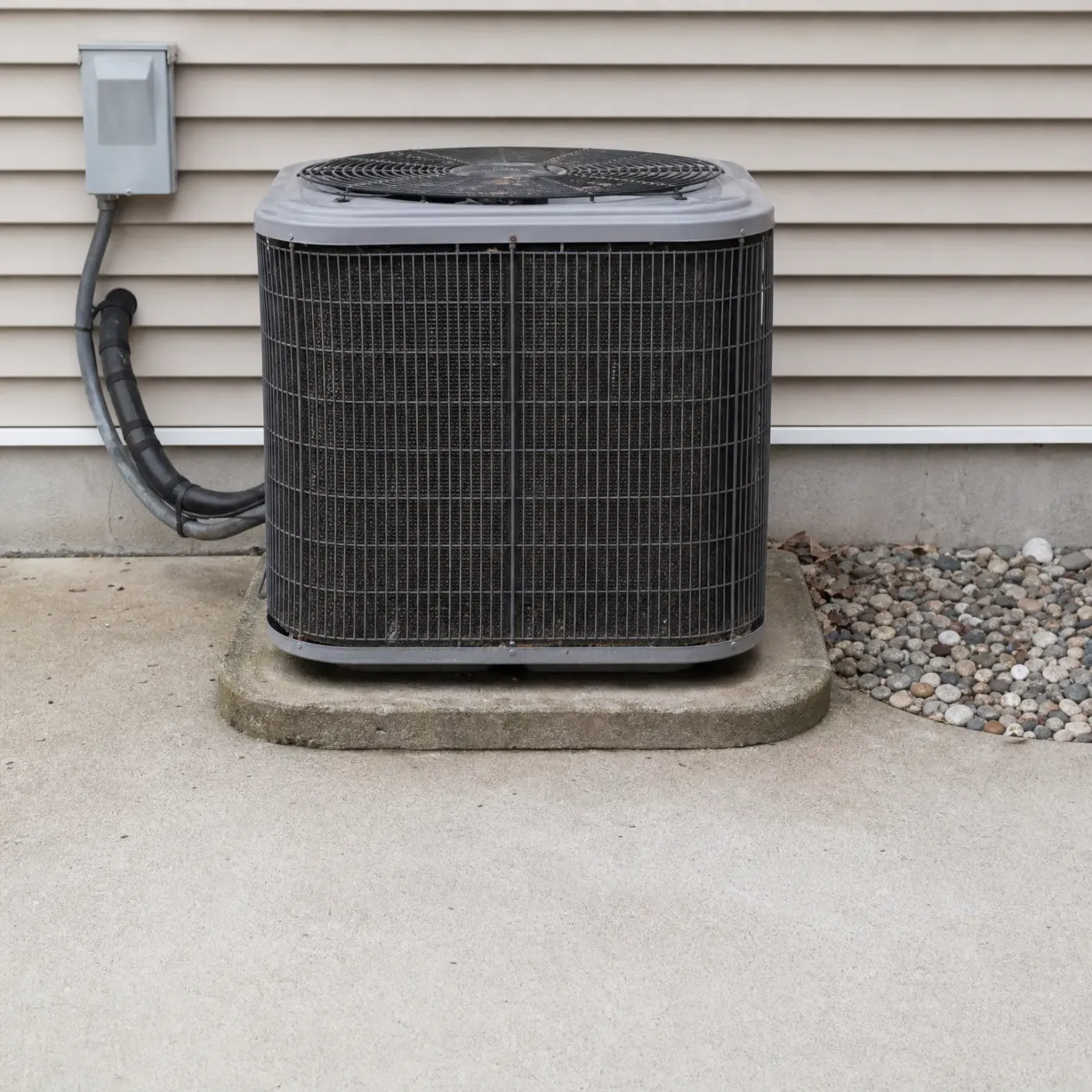
A gray outdoor condenser unit on a concrete pad beside a house with horizontal lap siding, with a wall-mounted disconnect box, conduit and insulated refrigerant lines, a shrub at left and gravel at right.

Running right

A heat pump that's keeping up pulls air across a clean coil and pushes it out close to the temperature it was set to reach. The outdoor unit sits clear of leaves and clippings, with open space around it so it can exchange heat the way it's built to.

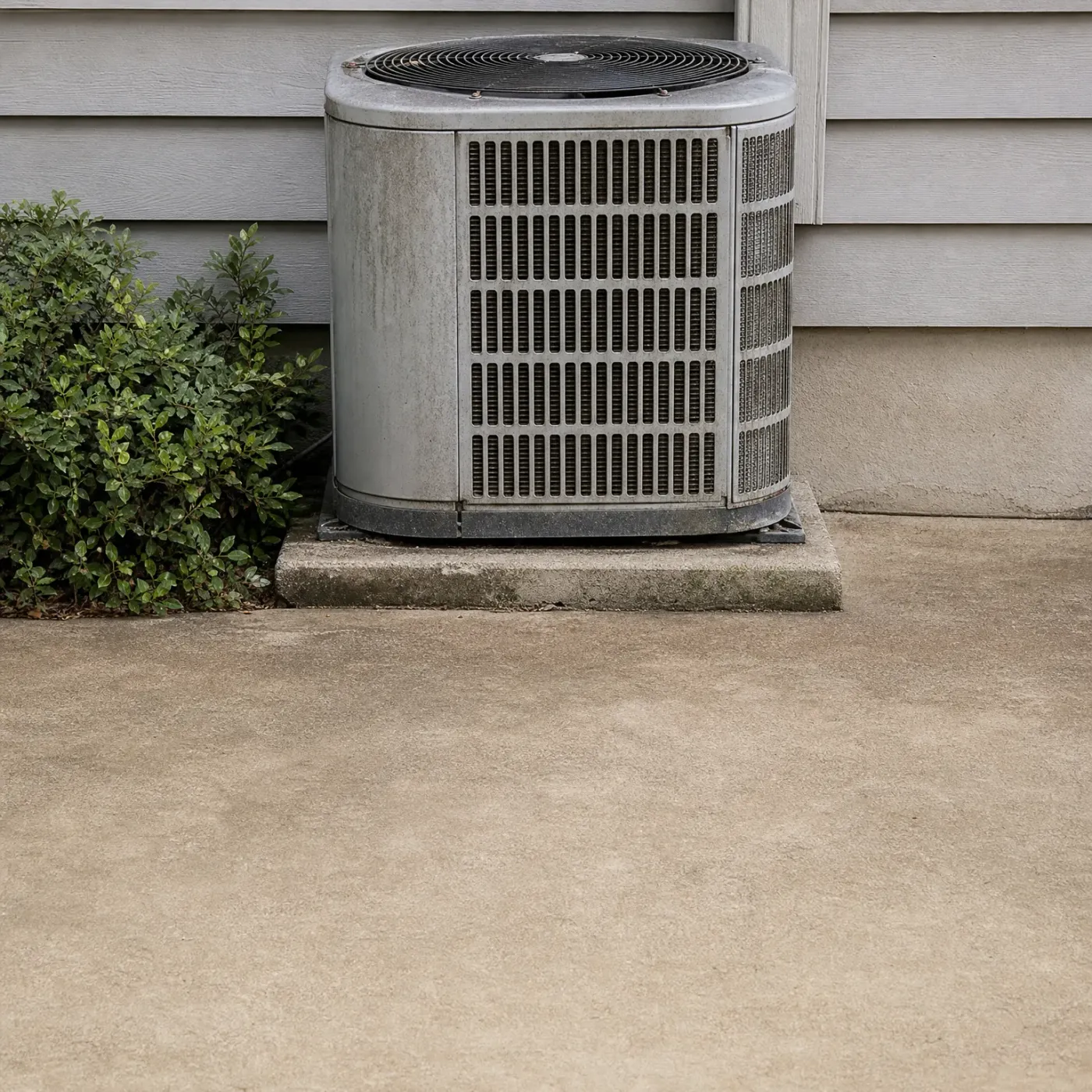
An outdoor air conditioning condenser unit on a concrete pad beside a house with horizontal lap siding, with a green shrub to the left and a wide concrete slab in the foreground.

Losing ground

Set against bare concrete with nothing to block it, this unit still can't throw off heat if the coil inside is caked with dust or the charge has dropped. The air it sends back into the house reads warm to the hand, and the house doesn't cool down.

A smiling bearded man in a navy sweater sits at a candlelit dinner table with a glass of red wine, a bowl of salad, and plates of food in the foreground.
A woman with dark hair in a bun reclines on a sofa with her eyes closed, wrapped in a cream fleece blanket, a closed blue hardcover book resting in front of her, with a lit lamp and a vase of dried flowers in the background.

What stuck in a low mode means

A heat pump has to pull heat out of outdoor air and concentrate it before it can push warm air into the house. A failing reversing valve can leave the system caught between heating and cooling instead of switching all the way over. A compressor losing strength can't build enough pressure to raise the refrigerant to a useful temperature. Either way, the air moving through the vents is real, it's just not getting heated the way it should. Some homes notice it right when the weather turns, because that's when the heat pump has to work hardest to catch up.

Why refrigerant and airflow matter so much

Refrigerant is what actually carries heat through the system, so a leak means there's less of it to do that job on every pass through the coil. Low refrigerant also lets the compressor run hotter than it should, which shortens its life. On the airflow side, a blocked coil or a struggling blower motor means the air spends less time in contact with the heat the system did manage to produce. In a state where electricity costs what it does, a heat pump running long hours for a weak result is an expensive way to stay only partway warm.

A woman in a cream sweater with her hair in a bun laughs while seated at a stone counter holding a glass of red wine, in a dimly lit interior with a sofa, houseplants and a large window at night.
A woman with long dark hair in a cream knit sweater laughs while looking off to the side, seated in front of a dimly lit kitchen with an island, stools, open shelving and a potted plant, with a glass of red wine in the foreground.
A smiling woman with long dark wavy hair in a light knit sweater sits at a marble counter with a glass of red wine, with a dimly lit living room and kitchen in the background.
A smiling woman with long wavy brown hair in a beige sweater sits at a white marble counter with a glass of red wine, with a living room, dining table and kitchen cabinets behind her.
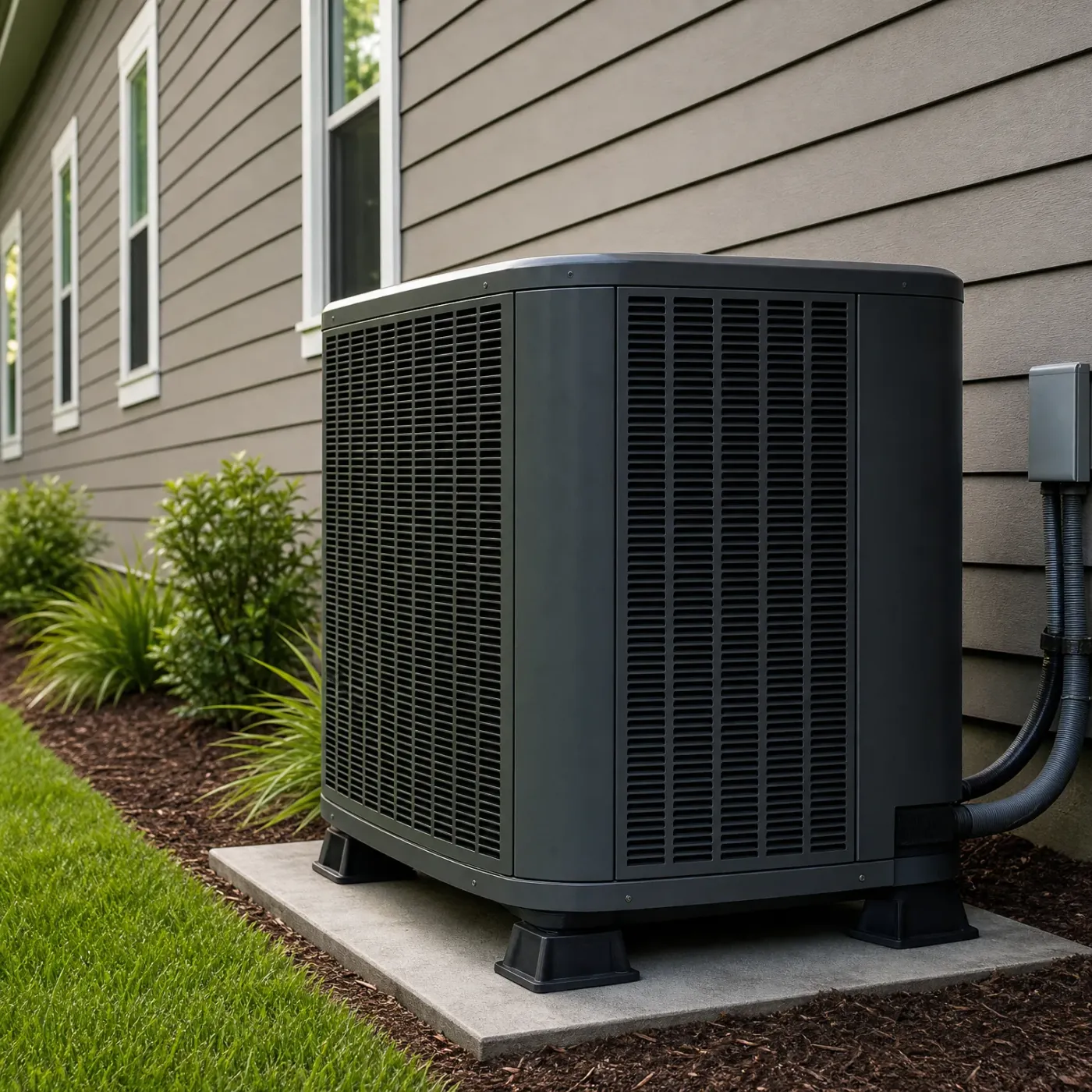
A dark gray outdoor condenser unit on a concrete pad beside a house with horizontal lap siding, with mulch beds, shrubs, and lawn nearby and conduit running to a wall-mounted box.

A heat pump pro near you

Answer a few questions instead of calling shop after shop.

Describe your heat pump job, and a local pro who handles it gets in touch.

Get my match

No charge to send it. You decide if you hire them.

Repair It or Replace It

Worth repairing

  • A reversing valve stuck in one position is a specific, known failure, and replacing it brings the system back to switching fully between heating and cooling.
  • Low refrigerant from a slow leak can be found, sealed, and recharged, which restores the temperature split across the coil.
  • A failed sensor or control board sending the system the wrong signal is a contained fix that doesn't touch the rest of the unit.
  • If the outdoor unit is clear and the filter is new and the air is still lukewarm, the problem is mechanical, not something a quick cleaning solves.
  • A system that otherwise runs fine and is just stuck in defrost or a low stage is often closer to a single part fix than a full swap.

Signs it's beyond that

  • A compressor that's lost its ability to build pressure is the core of the system, and when it's failing, blowing lukewarm air is usually the first symptom of several.
  • Refrigerant leaks that keep coming back from corrosion in the coil itself mean recharging buys time but doesn't stop the loss.
  • A system that needs the same repair twice in a year is telling you the underlying part is wearing out, not just malfunctioning once.
  • With power costs in California among the highest in the country, a heat pump working harder than it should to reach temperature adds up fast on the bill.
  • If the outdoor unit is old enough that matching parts are hard to find, a technician may recommend replacing rather than chasing repairs.
A dimly lit bedroom at dusk with a made bed, a table lamp on a nightstand, and a condensation-covered sash window with a dark curtain.

It's past eleven and the bedroom is still warm. You kicked the sheets off an hour ago and they're damp where your legs were. The window's cracked but nothing's moving through it, just the same still air that's been sitting in the house since dinner. You got up once already to check the thermostat, and it still says the heat pump is running, vents still pushing out air that's barely different from the room. California nights in August aren't supposed to need much help cooling off, but tonight the air coming out feels like it gave up partway. You lie back down on the dry side of the pillow and listen to the unit outside still cycling, working for something it isn't delivering.


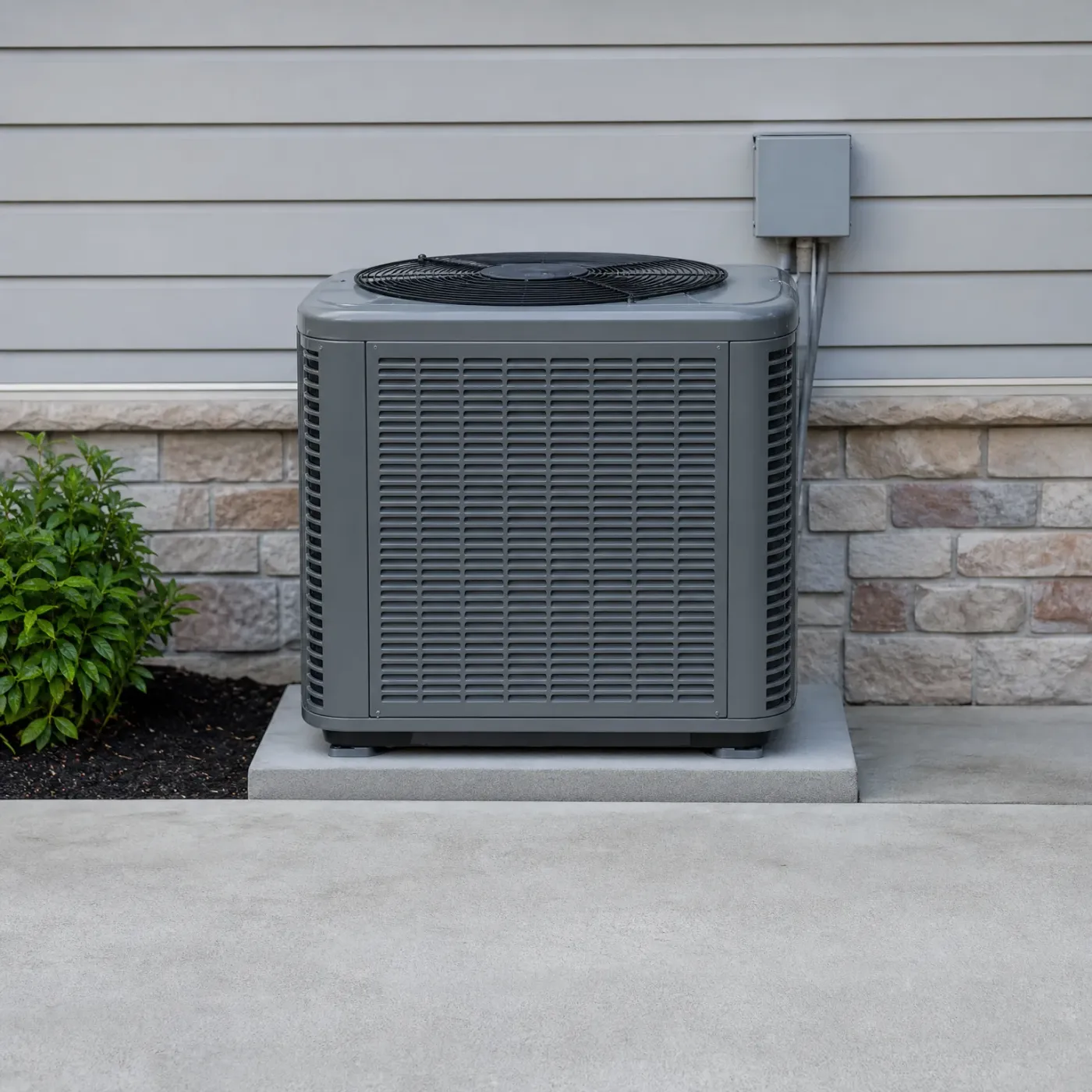
A gray outdoor condenser unit sits on a concrete pad against a house wall with horizontal siding above a stone veneer base, with an electrical disconnect box and conduit on the wall and a leafy shrub in mulch to the left.
The coil is clear and the air around the unit moves freely, so the heat pump exchanges heat the way it was built to.
An outdoor air conditioner condenser unit on a concrete pad beside a house with beige vinyl siding, with a gray electrical disconnect box and insulated refrigerant lines on the wall and river rock to the right.
Dirt packed into the coil fins blocks that exchange, and the air coming out loses its edge no matter what the thermostat says.

Power costs 31.35 cents per kilowatt-hour statewide

At 31.35 cents a kilowatt-hour, a heat pump running long and hard to make up for lukewarm air costs you more here than almost anywhere else. A stuck valve or a dirty coil doesn't just leave you warm, it runs up the meter while it fails to do the job.

EIA-861 2025 statewide residential average

  1. The thermostat calls for heat and the reversing valve sets direction.

  2. The compressor pressurizes refrigerant and sends it to the indoor coil.

  3. Air from the blower crosses the coil and picks up that heat.

  4. Warmed air moves through the ducts and out the vents.

A smiling man in a denim shirt and white t-shirt stands in an open dark doorway of a stucco house, facing a woman with long brown hair and a green jacket seen from behind in the foreground.

Lukewarm air has a cause, and it's fixable

A heat pump blowing lukewarm air is telling you something specific: a stuck reversing valve, refrigerant it's lost, or a coil that can't exchange heat the way it should. None of those get better by waiting, and on a power bill priced like California's, a system running long and hard to cover for a problem it can't fix on its own is money going out the door every evening.

Sorting out which of those three it is takes someone who can check the valve, test the charge, and look at the coil in person. Once you're matched with a contractor who handles heat pumps like yours, you're done explaining the problem from scratch to every name in the search results. They reach out, and you tell it once.

A gray upholstered sofa with a matching cushion sits beside a potted plant and a wooden table holding a small green plant in a stone pot, near a curtained window.
An outdoor air conditioning or heat pump condenser unit sits on a concrete pad surrounded by gravel beside a dark horizontal-sided house, with grass and shrubs nearby.

A local pro for your heat pump repair

Describe your heat pump job once, to one pro.

Step 1 of 3: Equipment