Profile view of a bearded man wearing a black baseball cap and a dark gray T-shirt against a plain light background.

Why your heat pump runs on emergency heat in California

Step 1 of 3: Equipment

Why is my heat pump stuck on emergency heat?

You turned the thermostat down low or noticed the bill jump, and now you see the system is running on emergency heat instead of its normal cycle. In most of California that's unusual, since this backup mode is built for homes where gas isn't an option and the heat pump needs real help in the cold. You want to know what's forcing it into that mode, because at California power prices it's not a setting you want running for long.

Your heat pump has switched to its electric backup because something is stopping it from moving heat the normal way

Emergency heat means the compressor outside has stopped and the system is making heat with electric resistance elements instead, the same kind used in a space heater. A thermostat set to "Em Heat" by mistake will do this, but if you didn't set it there, something failed: low refrigerant, a frozen outdoor coil, a bad compressor, or a control board that locked out the heat pump. Most homes in California lean on gas for heat, so this backup mode wasn't built with your power rates in mind. It costs more to run per hour than the heat pump cycle it replaced, and it isn't meant to carry a whole cold stretch on its own.

A smiling woman with dark shoulder-length hair in a cream V-neck sweater sits at a marble counter with a glass of red wine, with a kitchen and softly lit living room behind her.
A woman in a dark green sweater laughs while seated at a marble kitchen island with a glass of red wine, with open shelving, cabinets and a living room visible behind her.
A woman with long dark hair in a cream knit sweater laughs while looking off to the side, seated at a counter with a glass of red wine, in a dimly lit living room with a sofa, lamp, framed pictures and houseplant behind her.
A smiling woman with long dark hair in a beige sweater sits at a marble kitchen counter with a glass of red wine, with a dimly lit living room behind her.
A closed laptop and a cream mug of coffee on a coaster sit on a dark wooden table, with a potted plant at left and a kitchen counter, tiled backsplash and shelf of ceramics in the background.

What this means for your house

Emergency heat runs on electric resistance, not the heat pump's compressor. In most of the country that backup sits mostly idle because gas furnaces do the work. In your house it's the opposite problem: the heat pump itself is what should be running, and if it's locked into emergency heat instead, you're paying electric rates for every hour the thermostat calls for warmth. With power priced the way it is here, that difference shows up fast on the next bill.

Left alone, it also means the heat pump isn't getting checked for whatever pushed it into backup mode in the first place, whether that's a frozen coil, a bad sensor, or a stuck relay. Finding someone to look at it usually means searching for a contractor who actually works on heat pumps rather than just furnaces, calling a few, explaining the same symptoms each time, then sitting with quotes that don't line up. A local contractor who services this equipment every season already knows what tends to fail and can tell you quickly whether it's a simple fix or something bigger.

A gray upholstered sofa with a textured cushion sits beside a dark round side table holding a vase of green foliage, with a table lamp and sheer-curtained window behind.
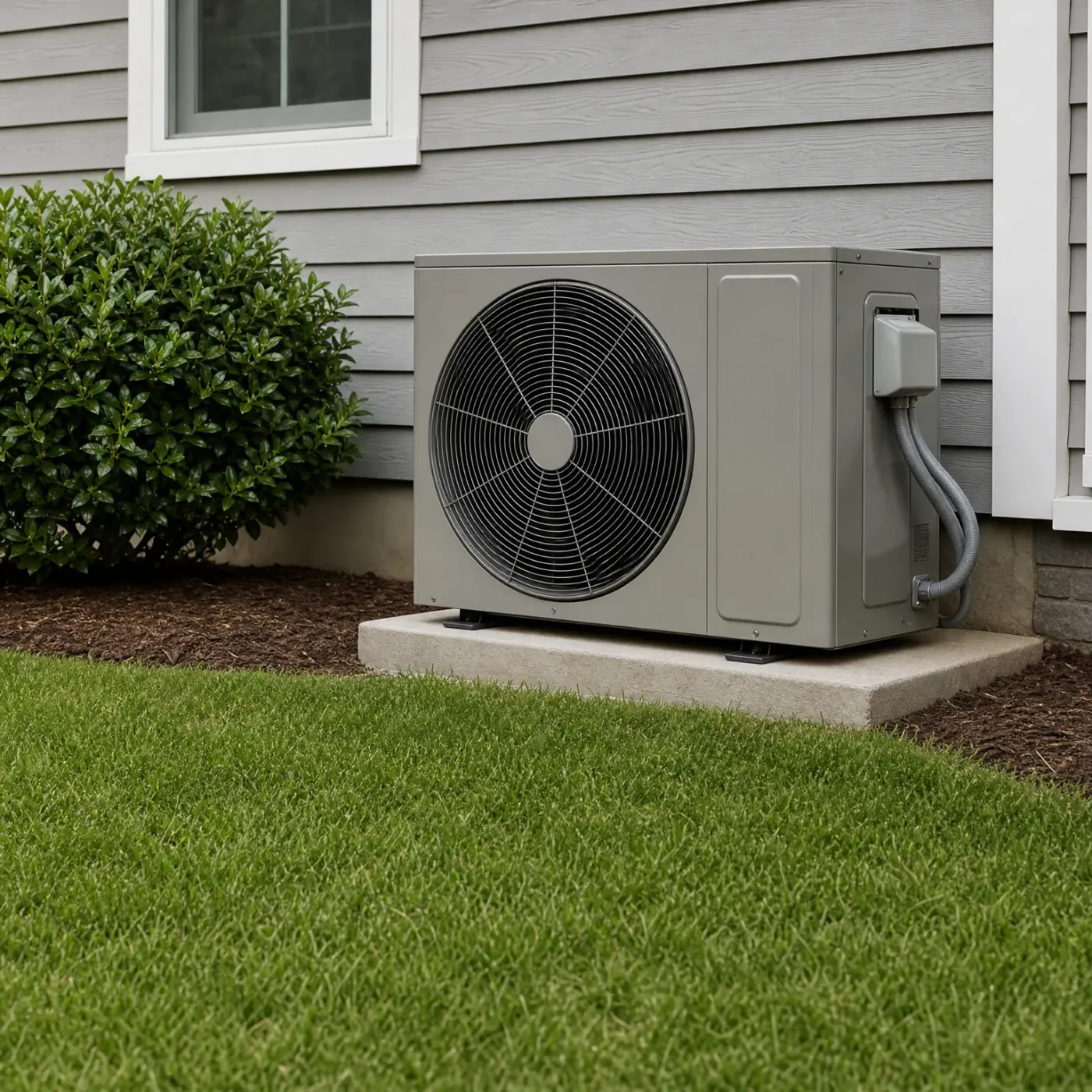
A gray outdoor heat pump unit with a large fan grille sits on a concrete pad beside a house with horizontal lap siding, next to a green shrub, mulch bed, and lawn.

Running the way it should

The unit cycles on its own, pulling heat from the outside air and sending it through the house. It draws power, but nowhere near what electric resistance heat draws. You'd never know it switched on unless you checked the thermostat.

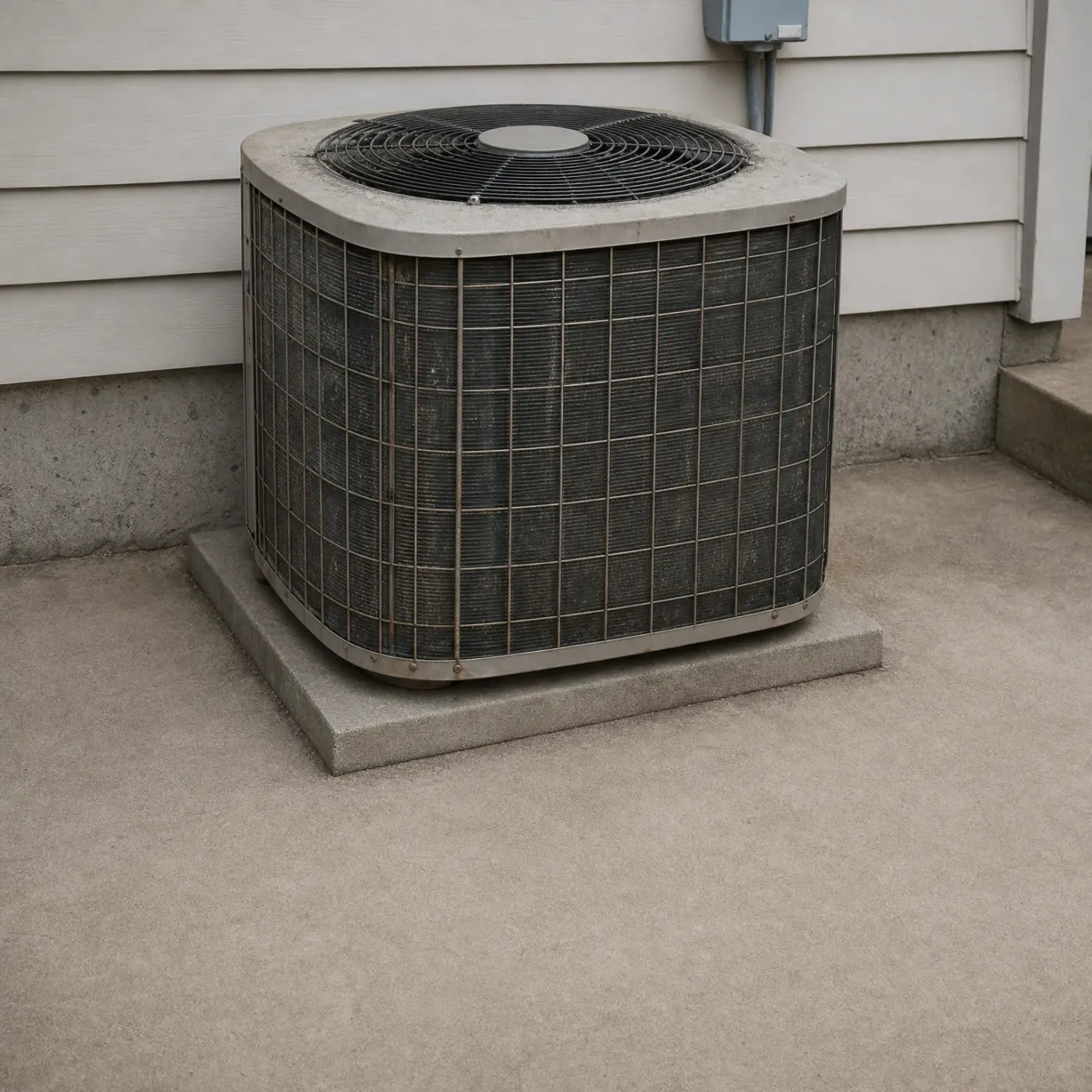
An outdoor air conditioning condenser unit with a top fan grille sits on a concrete pad beside a house with horizontal siding and a concrete step.

Stuck in emergency heat

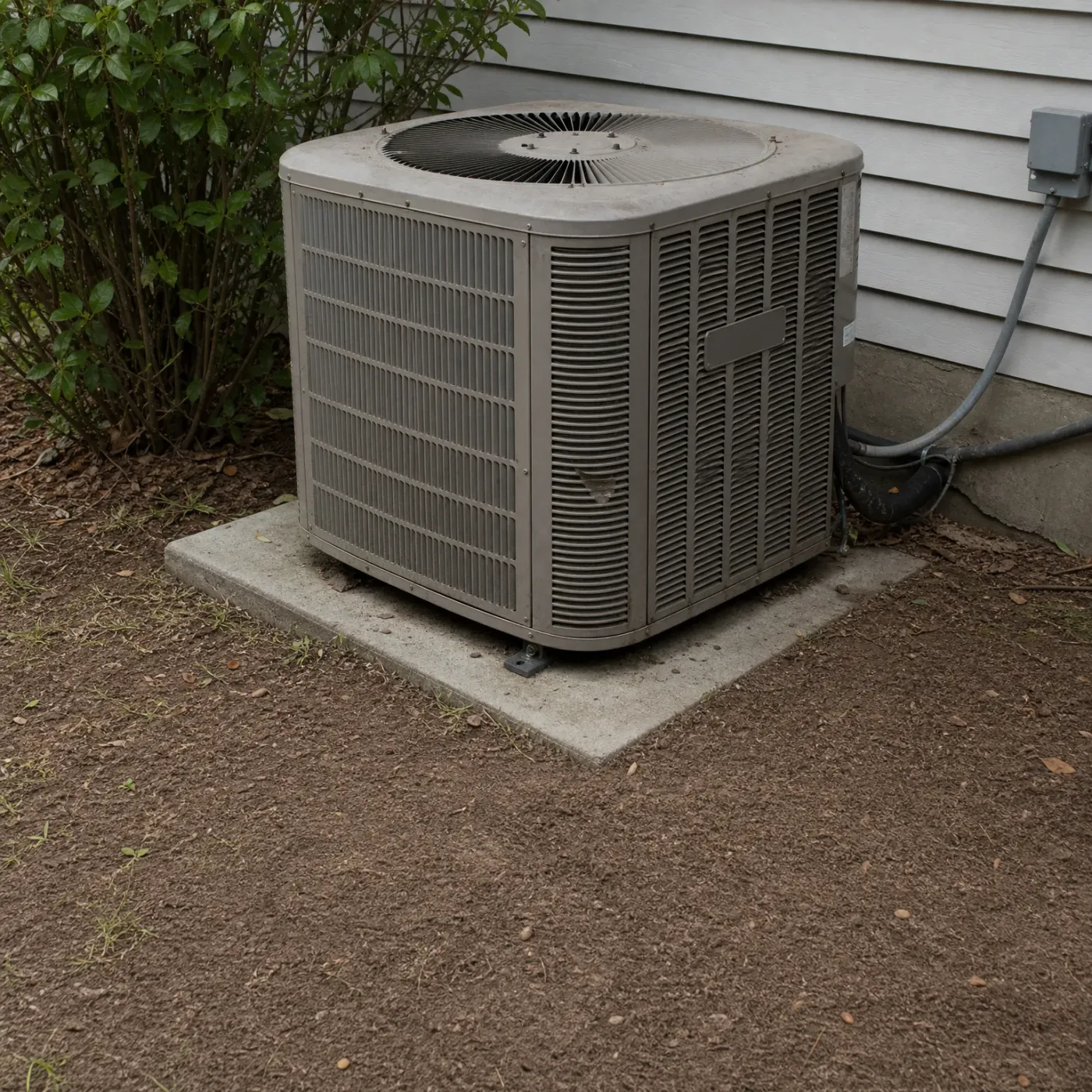
Dirt caked on the coil fins like this blocks the airflow the heat pump needs to pull heat from outside. The system senses it can't keep up and falls back to the electric strips instead, which is why the bill climbs and the thermostat shows emergency heat that won't clear.

Why does the house feel different and the bill feel worse

The air coming out of the vents feels hotter than usual, almost like a hair dryer instead of the steady warmth the heat pump normally puts out. The outdoor unit might be quiet when you'd expect it running, or you might hear it short cycling, switching on and off more than it should. The thermostat may show an "emergency heat" or "aux heat" light staying on instead of flickering on briefly during a cold snap. Since power in California costs more than almost anywhere else in the country, running electric resistance heat instead of the heat pump's compressor shows up fast, often within a single billing cycle. Left alone, the underlying problem with the heat pump doesn't fix itself, and the house keeps paying the difference every day it runs this way.

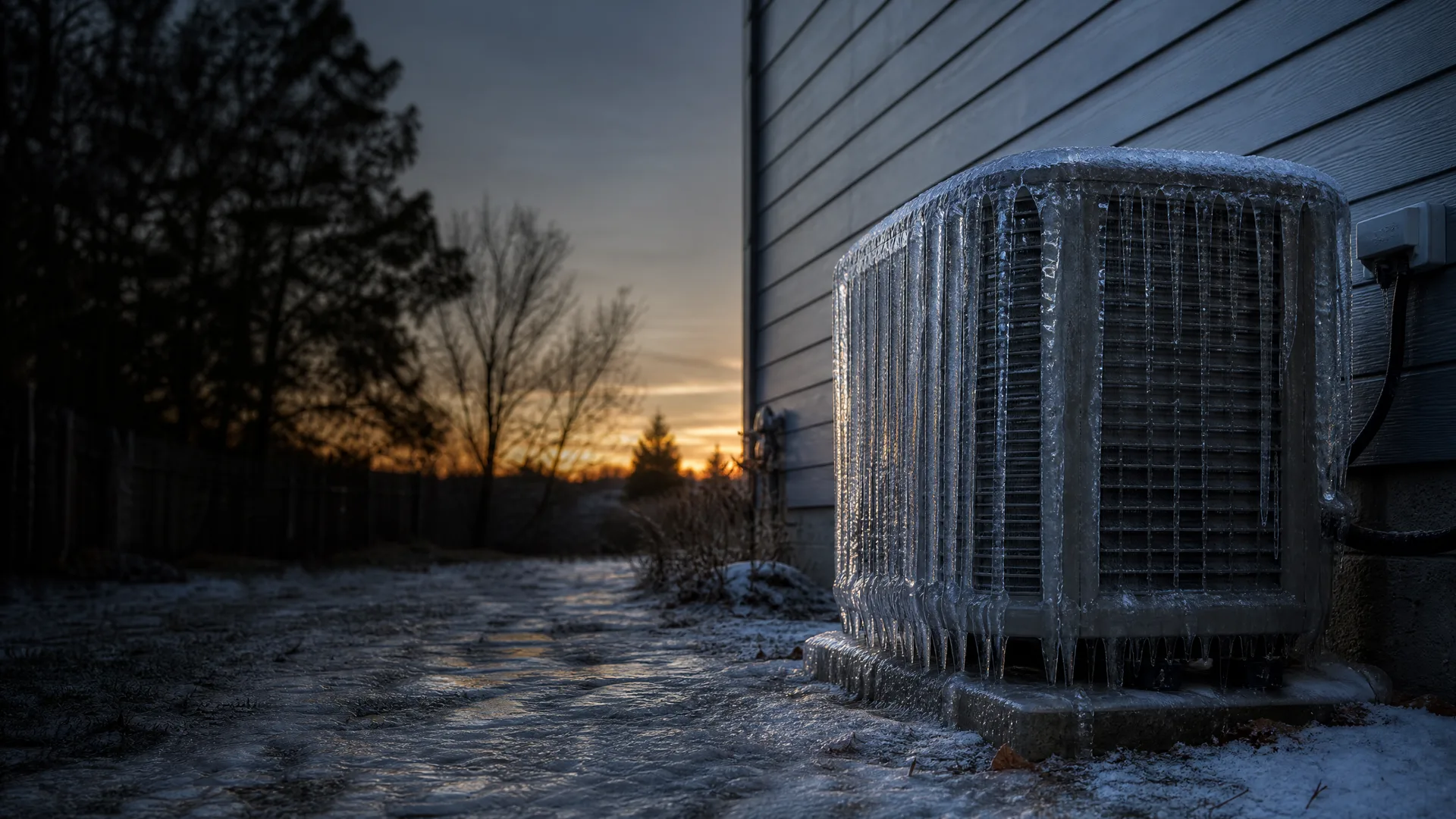
An outdoor condenser unit beside a horizontally sided house, encased in thick ice with hanging icicles, on a snow-dusted ground at sunset with bare trees in the background.

Six in the morning, still dark, and you go out the side gate to check the breaker box before work. The outdoor unit is sitting there wearing a shell of ice, thick over the coils, down into the fan guard. Frost like that doesn't happen here on its own. You already know the house ran warm and strange overnight, vents blowing hot and dry, the outdoor fan silent when it should have been turning. Now you're standing in the cold in your socks, looking at a block of ice on a machine that's supposed to pull heat out of January air, trying to decide if this is something you can knock loose with a garden hose or something you need a licensed tech out to look at before you leave for the day.


Skip calling around

A heat pump stuck on emergency heat usually comes down to a failed defrost control, a stuck reversing valve, a low refrigerant charge, or a sensor telling the system something that isn't true. Figuring out which one means checking the outdoor unit, the thermostat wiring, and the refrigerant circuit, and most homeowners aren't set up to do that themselves. The usual route is searching for HVAC contractors near you, calling a few, describing the ice on the coils or the hot blowing air to each one, then waiting on quotes and trying to judge who actually knows heat pumps instead of just gas furnaces, which is most of what gets installed in California. That takes time you're spending with the system running on expensive resistance heat the whole while. Submitting this request sends it to a local contractor who works on heat pumps in this climate regularly, who's seen a reversing valve stick the same way on a house down the street, and who already knows what to check first. You're not explaining it from scratch to five different companies. You're telling it once, to someone who gets what's actually wrong with your system off the breaker box this morning.

How the defrost board decides

  • A defrost board on a timer, not a true sensor, can call for defrost on a schedule even when the coil is clean.
  • The reversing valve has to shift a slide inside it to switch from heating to defrost; if it sticks halfway, the control board locks out the compressor.
  • A thermistor clipped to the outdoor coil tells the board when frost has built up, and a thermistor reading wrong can trigger emergency heat for no real reason.
  • Once the board decides something is wrong, it often latches into emergency heat and stays there until the system is reset or repaired.
  • Low refrigerant charge drops the coil temperature enough that the defrost sensor reads frost conditions even on a mild day.
  • Outdoor fan motors that run slow or intermittently can prevent proper defrost cycling and push the board into lockout.

The outdoor unit runs a defrost cycle every so often, reversing briefly to melt off the frost that builds on the coil in cold, damp weather. The board that runs this doesn't see the coil directly. It reads a thermistor clipped to it, and on some systems it just follows a timer regardless of what the coil looks like. Either way, the board is making a decision based on a signal, not on what's actually happening outside the house. If that signal is wrong, the decision is wrong too. A thermistor that's drifted or come loose can tell the board there's ice when the coil is dry. A reversing valve that doesn't fully shift leaves the system stuck between modes, and the board reads that as a fault rather than a stuck part. Low refrigerant charge cools the coil more than it should, which can mimic frost conditions on a day that isn't even cold. A slow or failing outdoor fan motor throws off the whole defrost cycle the same way, because the coil doesn't clear the way the board expects. Once the board sees enough of this, it stops trusting the heat pump side and locks into emergency heat, electric resistance only, until something resets it or a technician clears the fault. The lockout is the board protecting the compressor. The part causing it is almost never the compressor itself.

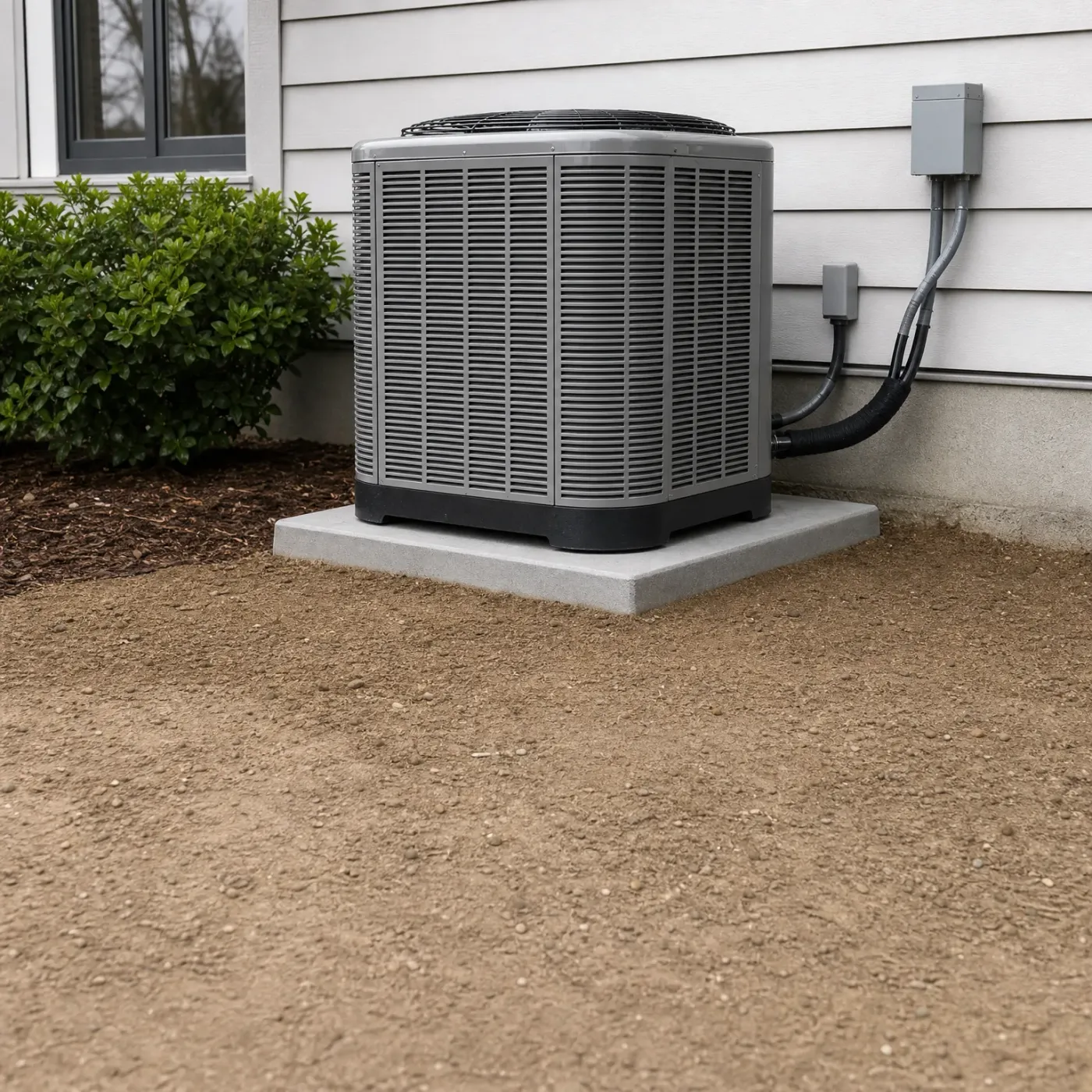
An outdoor air conditioner condenser unit on a concrete pad beside a house with horizontal lap siding, with a shrub to the left, bare dirt in front, and conduit and a metal disconnect box on the wall.
Before you get your heat pump repair
A gray outdoor condenser unit on a concrete pad beside a white horizontal-siding house, with refrigerant lines and conduit running to a wall-mounted disconnect box, bare soil in front and a green shrub at left.
After you get your heat pump repair

Power costs 31.35 cents per kilowatt-hour statewide

At 31.35 cents a kilowatt-hour, running on emergency heat costs you far more than the heat pump ever should. Electric resistance heat pulls a lot more power than the compressor it's replacing, and in California that difference shows up fast on the bill.

EIA-861 2025 statewide residential average

A heat pump stuck on emergency heat isn't broken beyond use, it's telling you something failed and gave up the honest answer: run the expensive backup until someone looks at it. A defrost board, a reversing valve, a refrigerant charge, a sensor, each one has its own fix, and a contractor who works on heat pumps in California every week has seen all four and knows where to look first. You'd be matched with one contractor, local and licensed, not a handful of companies competing for the callback, so you're not stuck explaining the same frost and the same bill three separate times. Once it's fixed, the system goes back to pulling heat from outside air the way it's built to, and the vents stop blowing that dry, overheated air. The ice on the outdoor unit and the number on your electric bill are both pointing at the same problem. It's worth having someone who knows this equipment take a look.

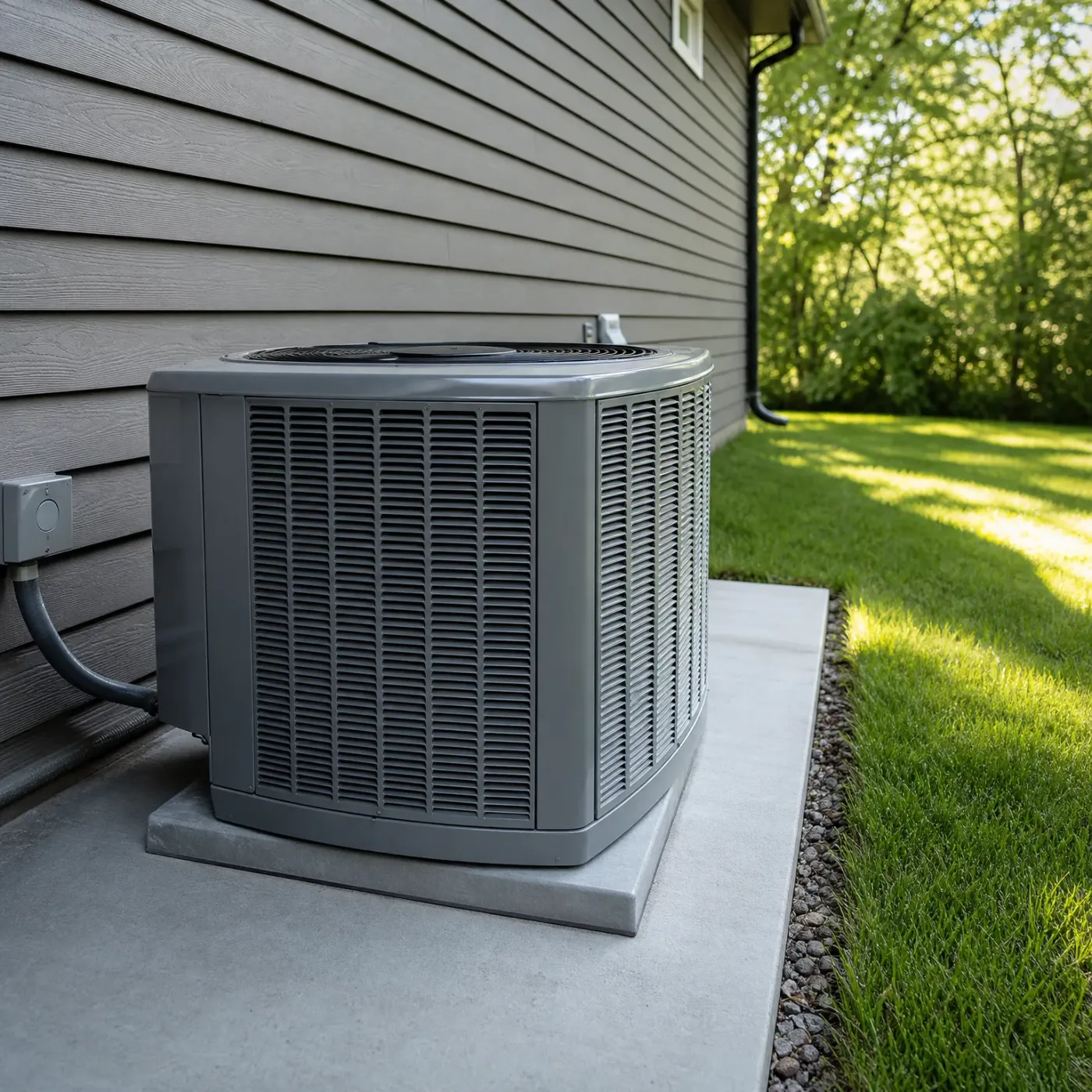
A gray outdoor air conditioner condenser unit on a concrete pad beside a house with horizontal lap siding, with an electrical disconnect box and conduit on the wall, a downspout, gravel edging and a green lawn with trees to the right.

Describe it once

Describe it once

Your request goes to one pro, not a list of companies.

No charge to send it. You decide if you hire them.