Tell us about the job
Takes about a minute. No obligation.
Sizing a heat pump for this county means working out what happens at the cold end of winter, not just the average. Homes in Alameda County, CA run heat about six months a year, from November through April. A heat pump loses capacity as outdoor temperatures drop, so a contractor has to model the coldest nights of that season, not the comfortable middle of it, before settling on a unit. An undersized system leans on its backup strip heat, which costs more to run and signals that the primary sizing call was off. The contractor's load calculation has to account for the house envelope, the local temperature floor, and where the heat pump's output curve intersects the building's actual demand.
Ductwork sized for a previous generation of forced-air equipment does not automatically carry a heat pump at the airflow rates the new system needs. Half the homes in Alameda County, California were built in 1969 or earlier (2020-2024 ACS 5-year). A contractor quoting a heat pump here opens registers, checks trunk dimensions, and pressure-tests before the equipment conversation starts, because undersized or leaking ducts push the job from a swap to a partial or full duct replacement. The electrical panel gets the same look: a service sized for what the house originally ran may need an upgrade before the new unit can be connected. What the house already has is what sets the scope.
What Goes Into a Heat Pump Installation
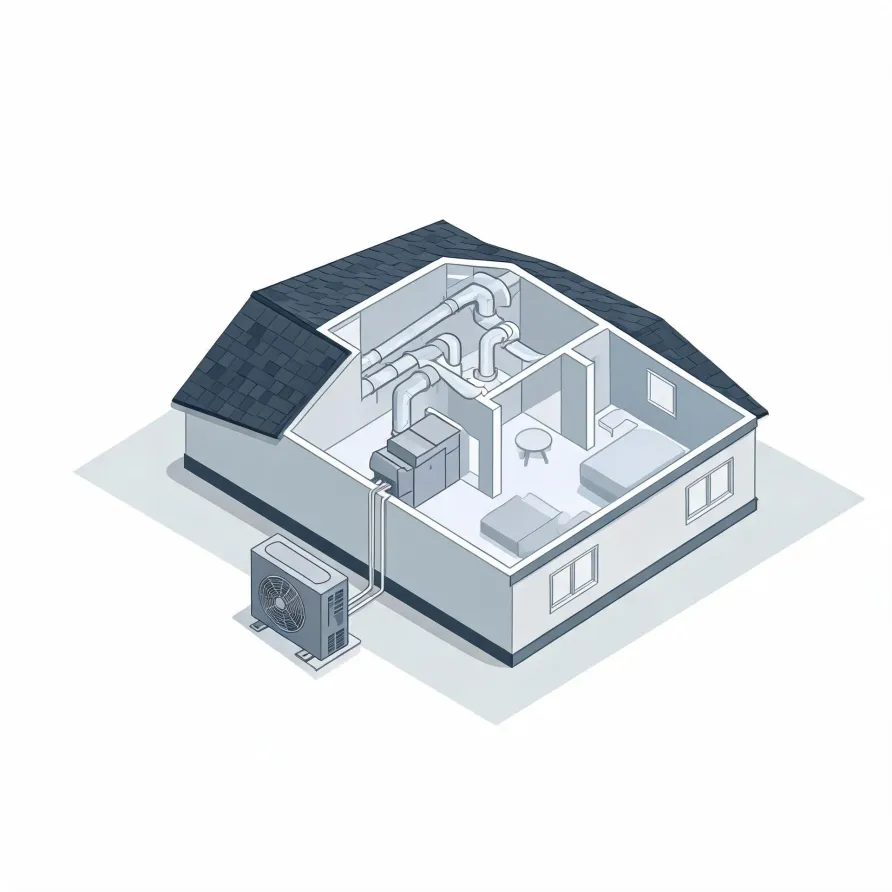
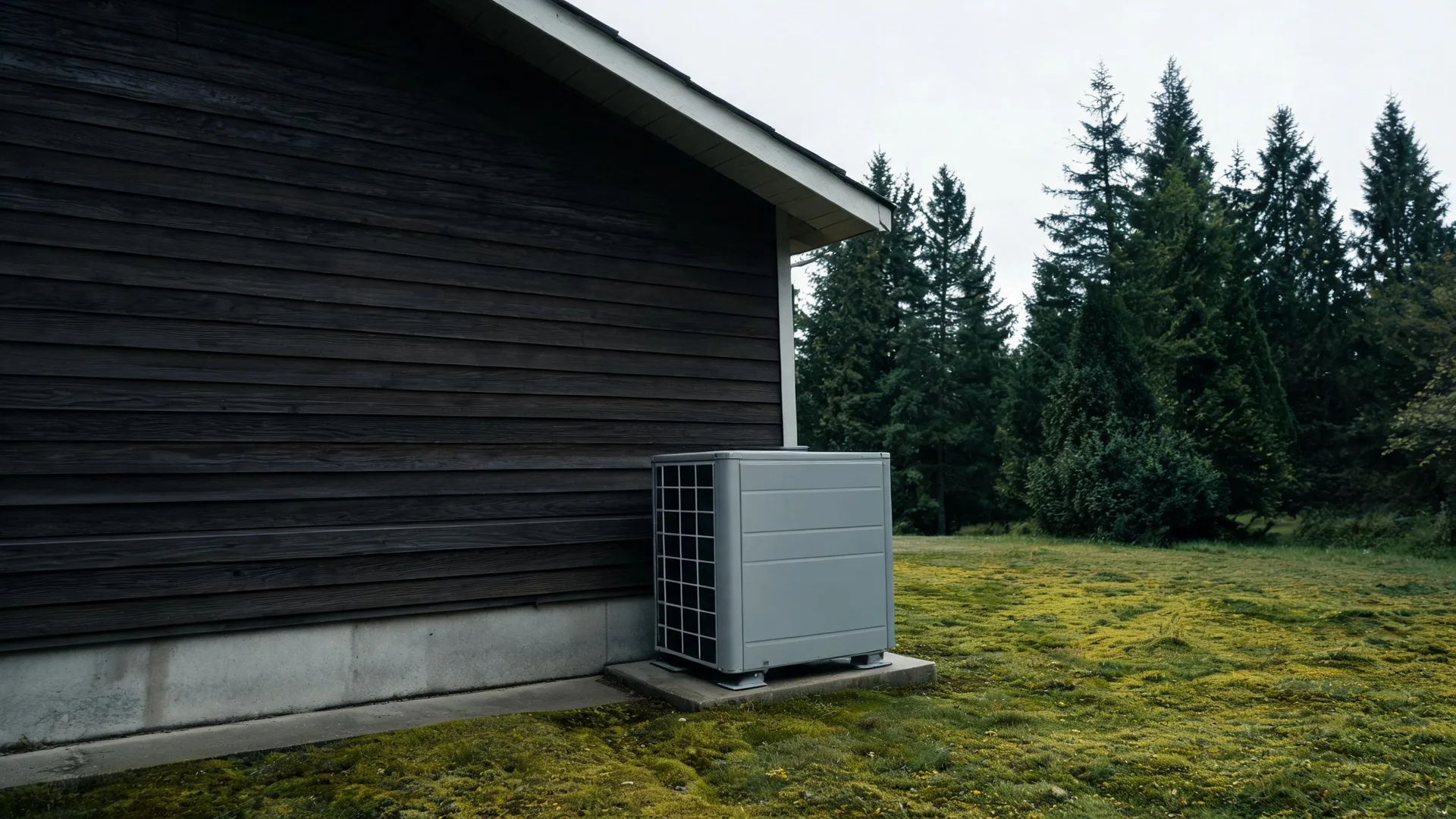
The outdoor unit is the piece a homeowner sees first, set on a pad beside the house, and it holds the compressor and the outdoor coil. Inside, the air handler mounts in a utility space, a closet, or an attic and moves conditioned air through the home. These two units are the core of what a contractor puts in.
A refrigerant line set runs between the outdoor unit and the air handler, connecting the two through an exterior wall. A thermostat goes on an interior wall where it reads the living space, and a condensate drain line carries moisture away from the air handler to a floor drain or outside.
The drawing shows a typical layout, and a licensed contractor determines exactly what the installation requires for this house.
Get matched in Alameda CountyAlameda County, by the numbers
186 severe weather events were recorded in Alameda County, California between 2015 and 2024.
NOAA National Centers for Environmental Information, Storm Events Database, bulk CSV export, events 2015-01-01 through 2024-12-31.Half the homes in Alameda County, California were built in 1969 or earlier (2020-2024 ACS 5-year).
U.S. Census Bureau, 2020-2024 American Community Survey 5-Year EstimatesAlameda County, California holds 637,212 housing units (2020-2024 ACS 5-year).
U.S. Census Bureau, 2020-2024 American Community Survey 5-Year EstimatesOwners occupy 54.4% of the occupied homes in Alameda County, California (2020-2024 ACS 5-year).
U.S. Census Bureau, 2020-2024 American Community Survey 5-Year EstimatesRules & Standards Governing Heat Pump Installation in Alameda County, California1 sourced rules and standards
Licensing and Legal Requirements in Alameda County, California
California requires a state contractor license: it is a misdemeanour to engage in the business of, or act in the capacity of, a contractor in California without one, unless the work is exempt.
Weather Stress on HVAC Equipment in Alameda County
Heating and cooling loads are shaped by what the weather actually does in a given place. A heat pump sized and installed for local conditions handles demand more reliably than one specified against a generic climate profile, which is why the weather record here is part of the picture for any installation decision.
186 severe weather events, 2015–2024. Source: NOAA National Centers for Environmental Information, Storm Events Database.