Tell us about the job
Takes about a minute. No obligation.
Sizing a heat pump for this county starts with what the heating season actually demands from the refrigerant circuit. Homes in San Francisco County, CA run heat about seven months a year, from November through May. Outdoor temperatures here stay low enough, long enough, that a unit running near the bottom of its rated capacity loses ground on the coldest nights, when heat output falls and the backup resistance element carries the load instead. A contractor has to establish the building envelope, the existing ductwork, and how the panel is configured before they can spec a system that holds up. Get those inputs wrong and the backup heat runs far more than it should, driving bills up and masking a fundamental sizing error.
Older ductwork and electrical panels carry the real decisions in a heat pump installation here. Half the homes in San Francisco County, California were built in 1946 or earlier (2020-2024 ACS 5-year). A house built that long before heat pumps became standard was wired for a smaller, different load, and what a contractor finds at the panel determines whether the installation moves forward or stalls on an upgrade first. Ductwork in those houses may have been retrofitted once or twice already, and each retrofit leaves conditions that have to be assessed on site before any equipment gets specified.
What a Heat Pump Installation Puts in Your Home
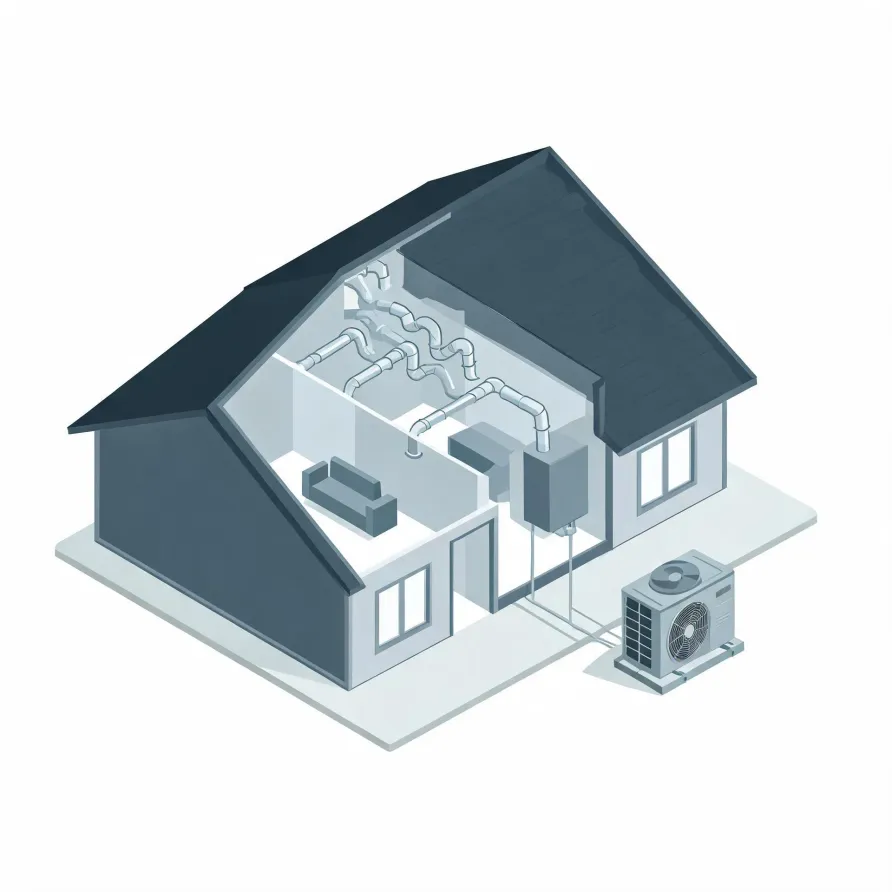
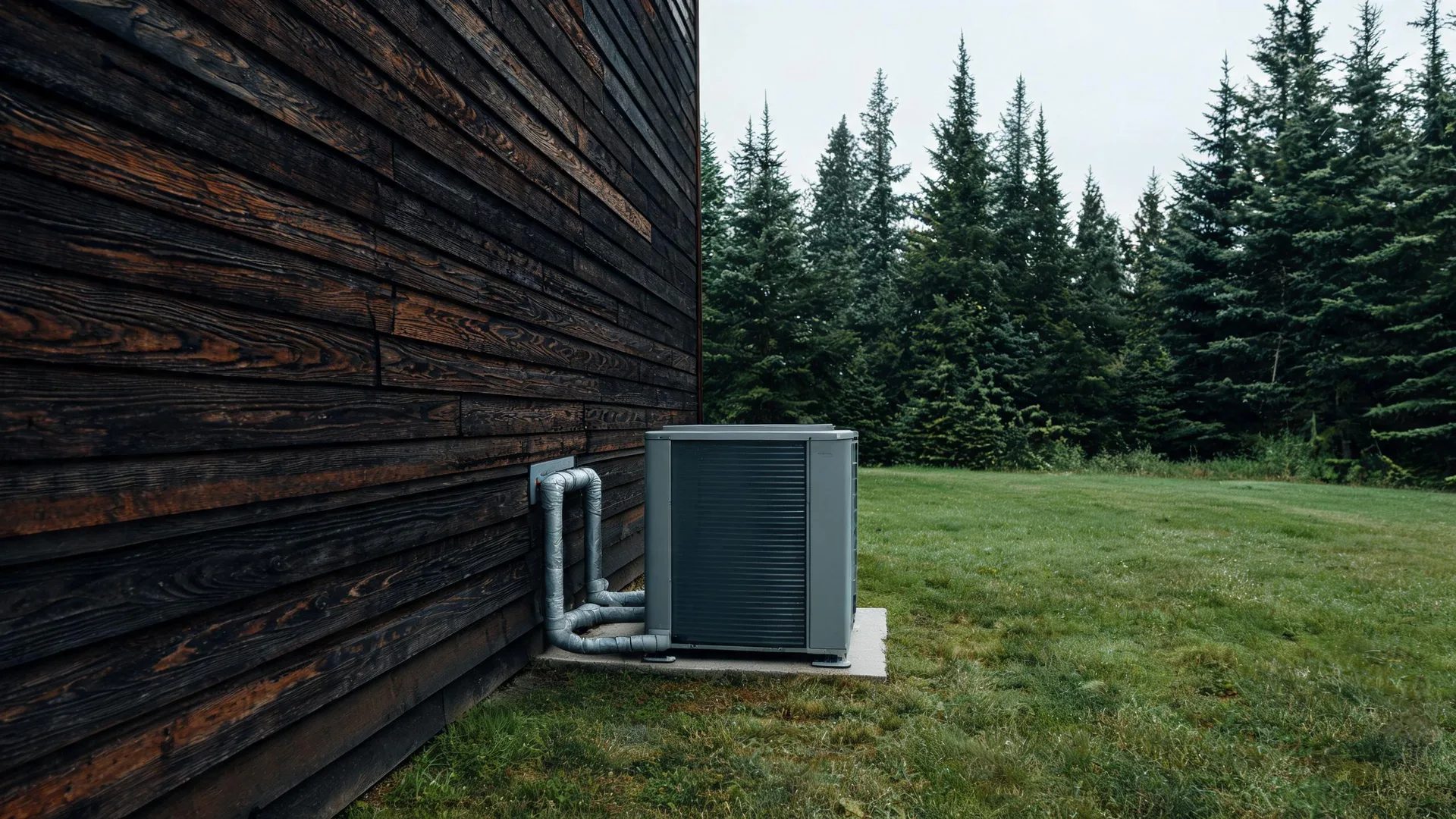
The outdoor unit is the piece most homeowners see first. It sits on a pad or bracket outside the house and holds the compressor and the outdoor coil, which together do the core work of moving heat between inside and outside. An indoor air handler mounts inside, usually in a closet, attic, or utility space, and pushes conditioned air through the home.
A refrigerant line set runs between the two units, carrying the refrigerant that links them into one working system. A thermostat mounts on an interior wall and gives the homeowner control over the whole system. Some installations also include a separate disconnect box on the exterior wall near the outdoor unit.
The drawing shows a typical layout, and a licensed contractor determines exactly what applies to your house and how each piece gets positioned within it.
Get matched in San Francisco CountySan Francisco County, by the numbers
66 severe weather events were recorded in San Francisco County, California between 2015 and 2024.
NOAA National Centers for Environmental Information, Storm Events Database, bulk CSV export, events 2015-01-01 through 2024-12-31.Half the homes in San Francisco County, California were built in 1946 or earlier (2020-2024 ACS 5-year).
U.S. Census Bureau, 2020-2024 American Community Survey 5-Year EstimatesSan Francisco County, California holds 414,602 housing units (2020-2024 ACS 5-year).
U.S. Census Bureau, 2020-2024 American Community Survey 5-Year EstimatesOwners occupy 38.2% of the occupied homes in San Francisco County, California (2020-2024 ACS 5-year).
U.S. Census Bureau, 2020-2024 American Community Survey 5-Year EstimatesCodes & Standards Governing Heat Pump Installation in San Francisco County, California1 sourced rules & standards
Licensing and Legal Requirements in San Francisco County, California
California requires a state contractor license: it is a misdemeanour to engage in the business of, or act in the capacity of, a contractor in California without one, unless the work is exempt.
Severe Weather Events in San Francisco County
Weather patterns set the baseline load a heat pump has to meet, year after year. How hard the equipment works in San Francisco County depends on what the climate actually does here, which is why local conditions belong in any honest conversation about installation.
66 severe weather events, 2015–2024. Source: NOAA National Centers for Environmental Information, Storm Events Database.